How Often Should You Do Water Changes? (And How Much)
The golden rule is 10-30% once a week — here's the science behind it, the signs you're changing too little or too much, and a step-by-step routine that won't stress your fish.
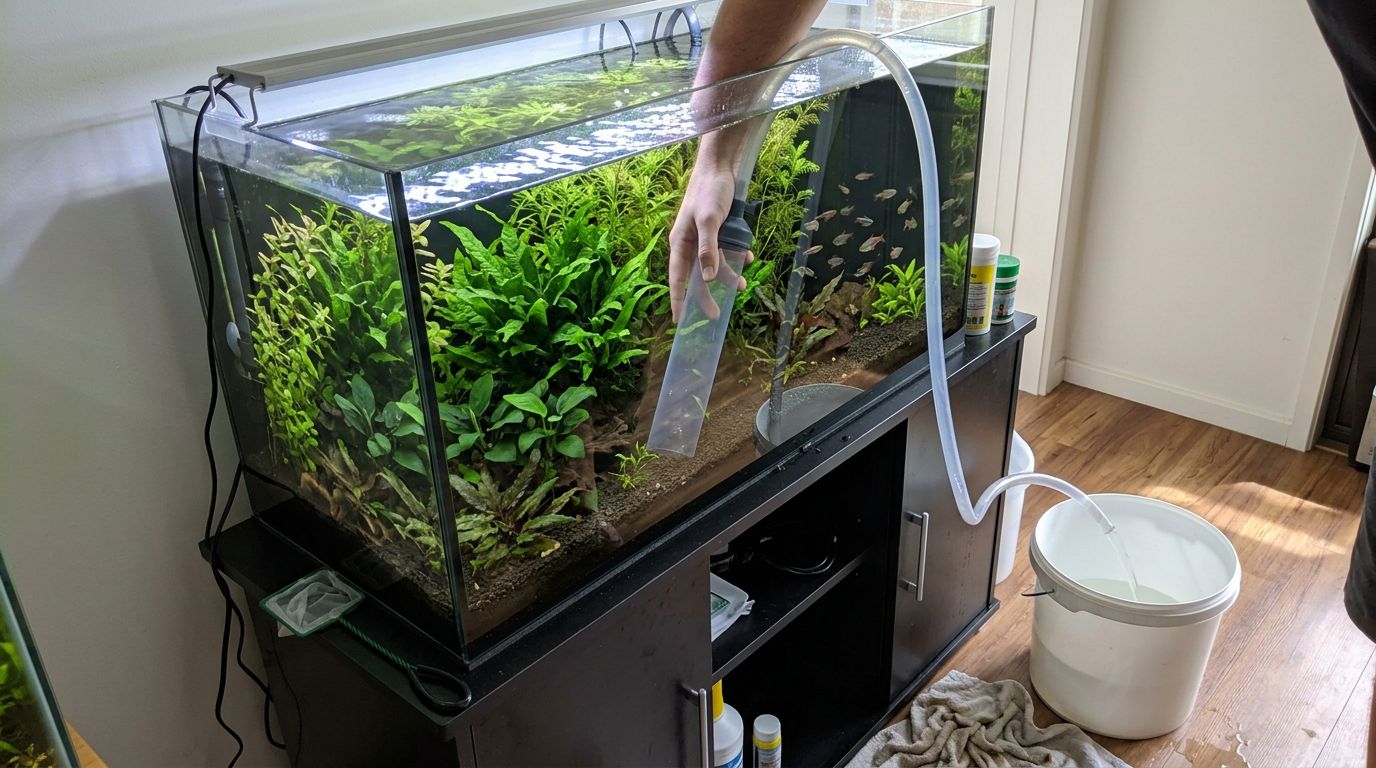
"Do I really need to change water every week?" It's one of the first questions every new fishkeeper asks. The short answer: once a week, 10-30% of your tank volume is the standard that works for most setups. Here's why — and how to find the exact schedule your tank needs.
Why water changes matter
Fish waste and uneaten food release ammonia, which is highly toxic. Beneficial bacteria convert it to nitrite, then to nitrate (the nitrogen cycle). Nitrate is far less harmful — but unlike the others, it keeps accumulating. Water changes are how you remove it.
So a water change isn't about making the water look clean. Crystal-clear water can still be loaded with nitrate.
Small and frequent beats big and rare
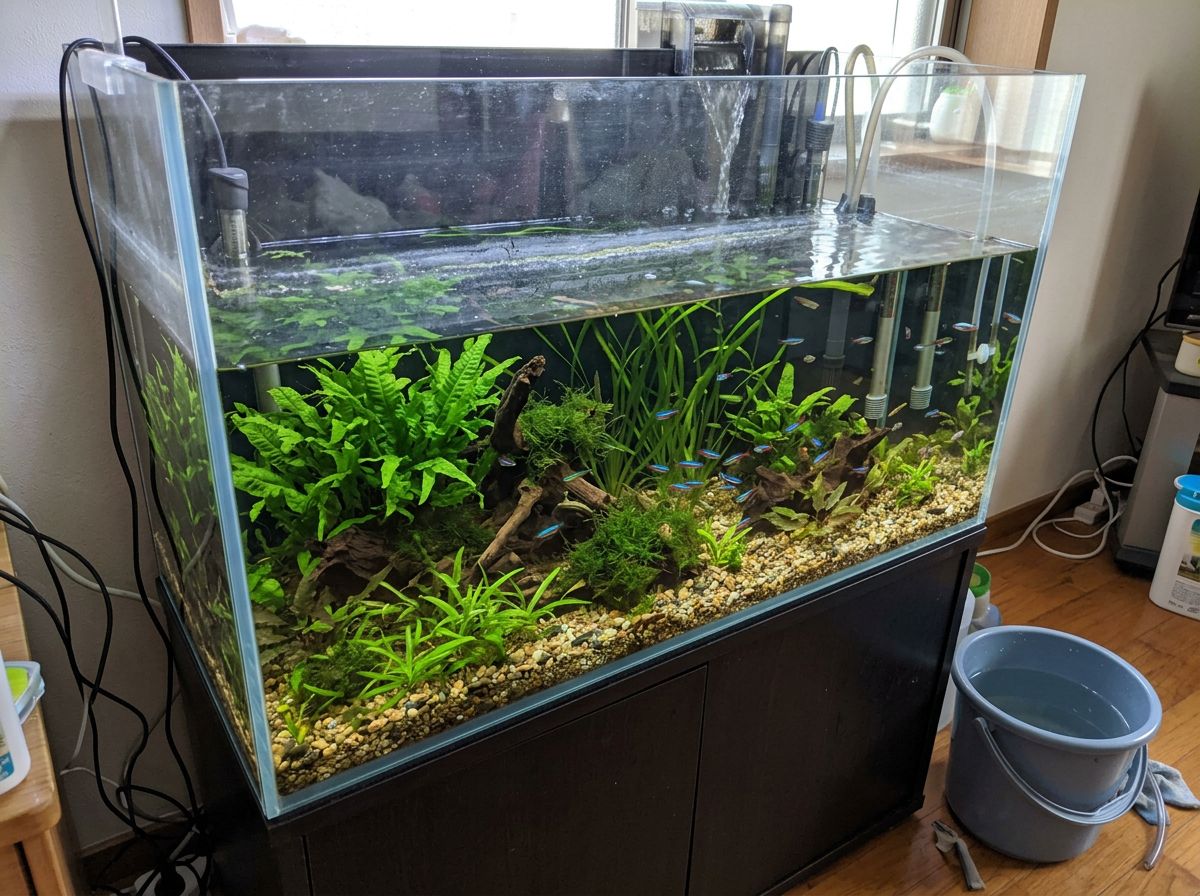
The key principle: frequent small changes are safer than occasional large ones.
Swapping out half the tank at once causes sudden shifts in temperature, pH, and hardness — serious stress for your livestock. A pH swing of more than ±0.3 in a day is already danger territory. Changing 20% every week is far gentler than 50% after two weeks of neglect.
Rough guidelines by tank type:
- Heavily planted, lightly stocked: 15-20% may be enough
- Typical community tank: 20-30% weekly
- Heavily stocked or high-tech CO2 planted tank: 30% or more
Let nitrate tell you your tank's ideal schedule
There's no universal answer — the rational approach is to use nitrate (NO3) as your indicator.
- Keep nitrate at 0-25 mg/L (ideally under 10)
- Above 40-50 mg/L is the danger zone — change water now
- Test weekly and watch how fast it climbs; the trend tells you whether "weekly 25%" is right for your tank
Test weekly and log the results. The Aquarium app (get the app) charts your nitrate trend over time, so "time for a water change" becomes a number you can see, not a guess.
A routine that won't stress your fish
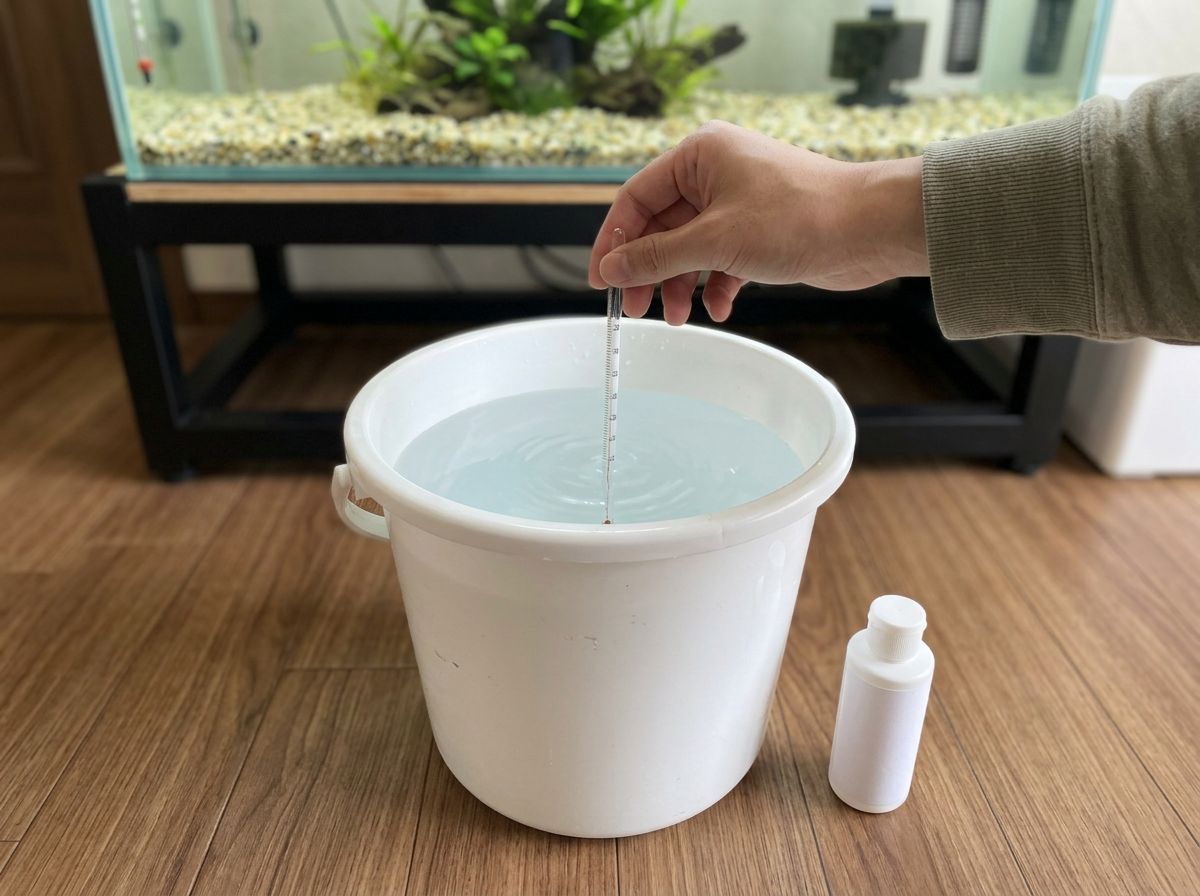
- Always dechlorinate new water. Even trace chlorine damages gills — and chloramine, used in many municipal supplies, doesn't evaporate by letting water sit, so use a water conditioner
- Match the temperature within 1-2°C (2-4°F) of the tank before pouring
- Vacuum only part of the substrate each time (for aqua soil, skim the surface gently — deep gravel-vacuuming breaks down its structure)
- Never clean your filter on the same day. Doing both wipes out too much beneficial bacteria at once and can crash your water quality
FAQ
What happens if I skip water changes?
Nitrate builds up, fueling algae outbreaks and weakening fish (poor appetite, higher disease risk). And don't "catch up" with one massive change afterward — resume with several 20-30% changes over a few days.
Can I change water too often?
Small daily changes (around 10%) are fine. Most beneficial bacteria live in your filter media and substrate, not the water itself — the risk isn't losing bacteria, it's parameter swings from large single changes.
What about a newly set-up tank?
Until the nitrogen cycle completes (typically 4-6 weeks), your tank is in a special phase. If ammonia or nitrite shows up on a test in a tank with fish, do a small water change the same day (10-30%, dechlorinated and temperature-matched) and test daily until it is back to 0. If the reading is still in the danger zone after the change (ammonia 0.25 mg/L or more, nitrite above 0.5 mg/L), do a second small change that day and feed less.
Takeaways
- The baseline: once a week, 10-30% — small and frequent wins
- Your tank's true schedule is in the nitrate log (change water past 40 mg/L)
- Three rules: dechlorinate, match temperature within 1-2°C, never clean the filter the same day
The hardest part of water changes is simply remembering them. The Aquarium app (get the app) combines water change logs, reminders, and water quality charts in one place.