How to Acclimate New Fish: Floating the Bag and Drip Acclimation
Float the bag 15-30 minutes, then mix in tank water a little at a time and move only the fish. Shrimp and sensitive species get a 30-60 minute drip.
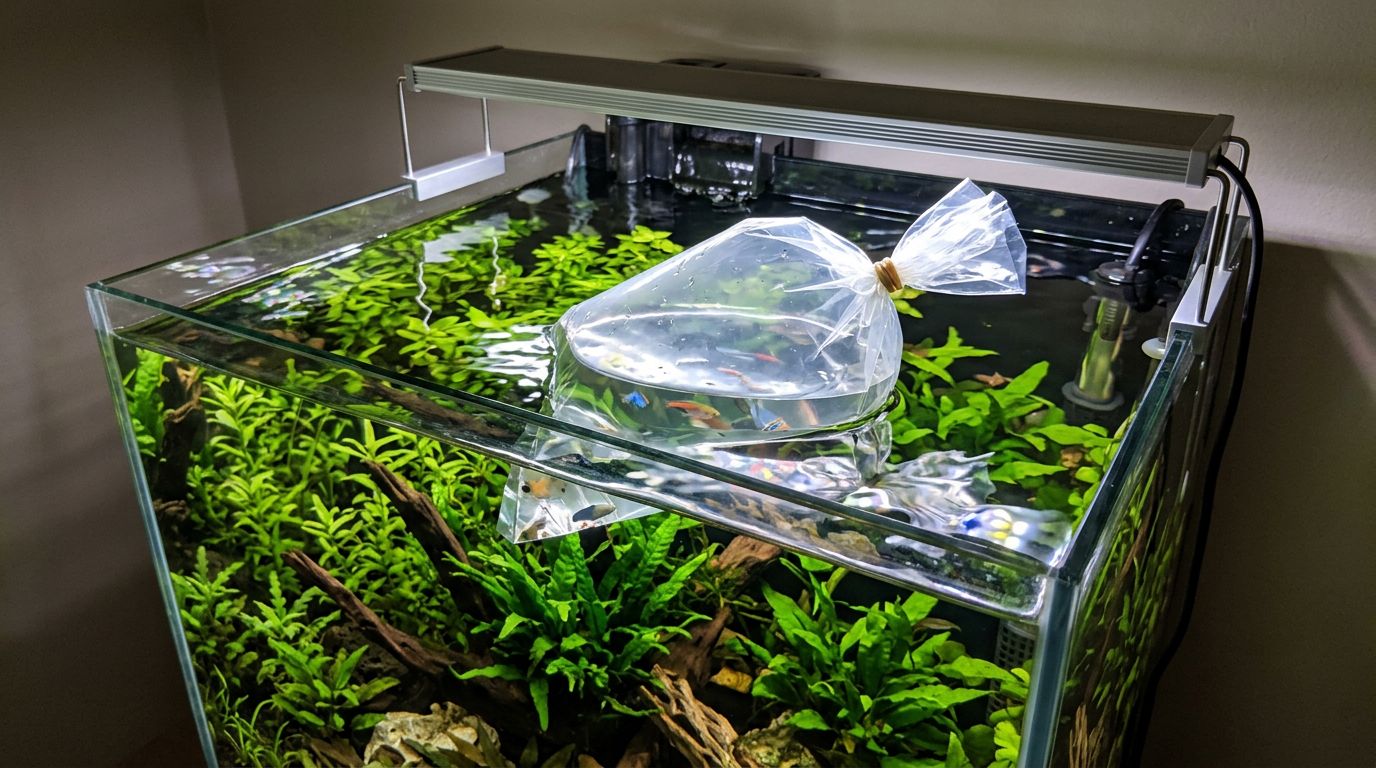
"Can I just tip the bag into the tank?" "How long is acclimation supposed to take?" Everyone asks on the day they bring fish home. The short answer is two stages: float the sealed bag for 15-30 minutes to match the temperature, then mix in tank water a little at a time so the fish adjust to the water chemistry. At the end, move only the fish; the bag water stays out of the tank. For shrimp and sensitive species, use drip acclimation over 30-60 minutes. If the tank already holds fish, the new arrivals go into a separate quarantine container, not the main tank. This guide explains why acclimation matters, how to do each stage, and what to watch once the fish are in.
Why acclimation is needed
Shop water and your tank water are not the same. The temperature differs, and so does the pH. What stresses fish is less the number itself than how fast it changes.
- Temperature: even for a routine water change, new water should be within 1-2°C (2-4°F) of the tank. When you are moving the animal itself into different water, closing that gap matters even more
- pH: stability matters more than the exact value, and a swing of 0.3 or more in a day is in the danger zone. Moving a fish straight from bag water to tank water can make that change happen in an instant
Acclimation spreads both changes over time. A fish that looks lively in the bag is not exempt from the strain of a sudden change, so don't skip acclimation on appearances.
Before you start, decide which water you are acclimating to. For the first fish in a cycled, empty tank, that is the main tank. If the tank already holds fish, it is a separate quarantine container, not the main tank (the fish stay there for two weeks before joining; see quarantining new fish). "The tank" below means wherever the fish are going.
Step 1: float the bag for 15-30 minutes
Temperature comes first.
- Float the bag, still sealed, in the tank
- Wait 15-30 minutes while the water in the bag approaches the tank temperature
- Open the bag, put the thermometer in the bag water, and confirm it is within 1-2°C (2-4°F) of the tank
The 15-30 minutes is a guide, so finish by checking the temperature. Your hand is not a reliable gauge, so measure both the tank and the bag water with a thermometer and go by the readings. See choosing a thermometer and logging temperature daily.
Always finish the temperature match before starting on water chemistry. However rushed you are, don't skip it.
Step 2: mix in tank water a little at a time
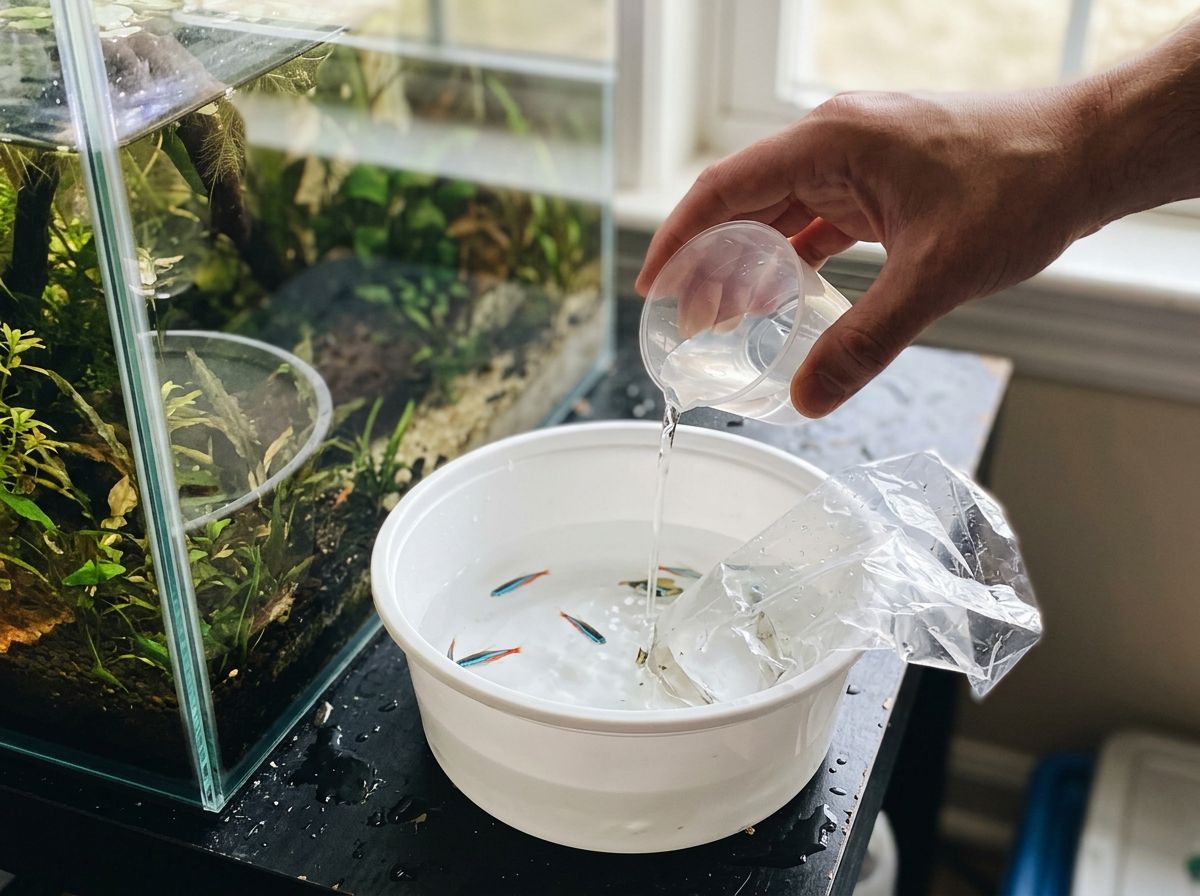
Once the temperatures match, move on to water chemistry. The method is simple: add small amounts of tank water to the bag (or to a separate container).
- Add a little, wait, and repeat, never a large amount at once
- The bag water gradually becomes more like the tank water
- Watch the fish as you go and check that they are swimming calmly
- At the end, net the fish out and move only the fish. Don't pour the bag water into the tank; shop water can carry waste and pathogens
How often and how many times depends on the species, so this article gives no universal figure. If the care guide for your fish gives one, follow it (for example, neon tetras take 30-60 minutes). Otherwise ask the shop how they recommend acclimating the fish you are buying. The principle is the same everywhere: the bigger the difference between shop water and yours, the more time you take.
Shrimp and sensitive species: drip for 30-60 minutes
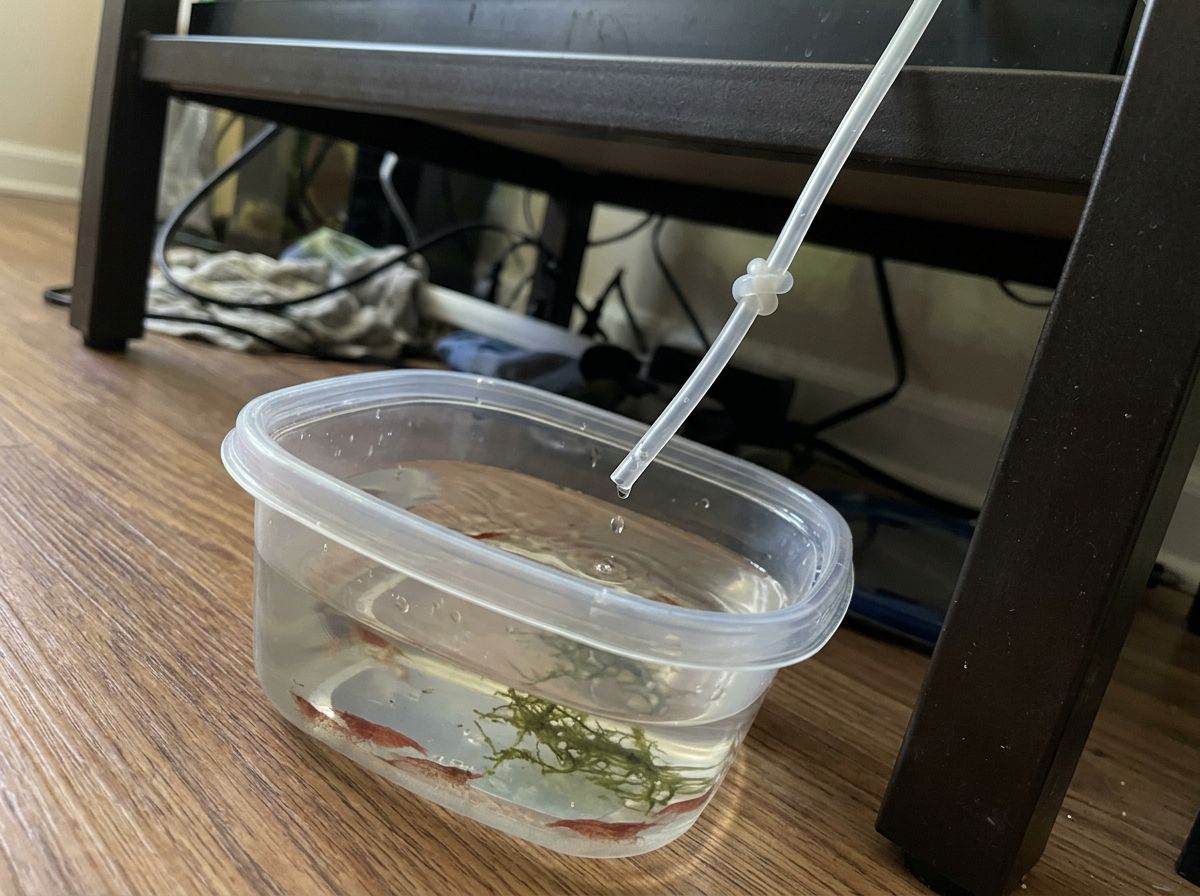
For shrimp and species that react strongly to changes in water chemistry, use drip acclimation. Tank water is added drop by drop, which brings the two waters together more gently. The guide is 30-60 minutes. When the shop water and yours differ a lot in pH or other water chemistry, dripping is the safer choice for fish too.
- Match the temperature first (float the bag for 15-30 minutes)
- Move the animals, with their bag water, into a separate container
- Use a thin tube to let tank water drip slowly into the container
- Take 30-60 minutes to bring the container water close to the tank water
- Net the animals into the tank. Don't add the container water
Because the drip takes a while, check that the container hasn't drifted towards room temperature and away from the tank. Species-specific details are covered in the individual care guides.
After they're in the tank
Once the fish are released, the observation period begins.
- Daily observation: check appetite, swimming, body surface, fins and breathing at feeding time. New arrivals are the most likely to show changes, so look more closely than usual. See five things to check every day
- If you are adding to a tank that already holds fish, a two-week quarantine is the standard recommendation. The acclimation above is done to the quarantine container; after two weeks of observation, acclimate the fish once more and move them to the main tank. If these are the first fish in a cycled, empty tank, no separate container is needed; observe them daily in the main tank for the first two weeks
- The tank has to be cycled. Fish added to a tank that hasn't finished cycling are under strain however carefully you acclimate them. Zero ammonia and zero nitrite in a tank that has only been filled and left running does not show the cycle is complete. Add livestock a few at a time
Water changes and top-offs follow the same idea
Avoiding sudden change isn't only for arrival day. For weekly water changes and evaporation top-offs too, dechlorinate the new water and match it to within 1-2°C (2-4°F) of the tank. Chloramine, which some tap water contains, does not dissipate when water is left to stand, so use a conditioner. More in chloramine and dechlorinators.
FAQ
How long should the whole process take?
The figures we can give are 15-30 minutes for the temperature match, and 30-60 minutes for drip acclimation of shrimp and sensitive species. For the stage where you mix tank water into the bag, this article gives no fixed time or count. It varies with the species and the shop's water, so follow the care guide for your fish or check with the shop at purchase.
Should I drip acclimate fish as well?
Drip acclimation is aimed at shrimp and species sensitive to changes in water chemistry. On this site we recommend it for otocinclus, for sensitive corydoras such as pandas, and whenever the shop water and yours differ a lot in pH. If you aren't sure whether your fish counts as sensitive, ask the shop how to acclimate it.
After acclimation, can the fish go straight into my main tank?
Acclimation closes the gap in temperature and water chemistry. It tells you nothing about the health of the new fish. When adding to a tank that already holds fish, the standard approach is two weeks of quarantine in a separate container first. In that case the first acclimation is to the quarantine container's water.
Summary
- Acclimation exists to avoid sudden changes in temperature and pH. A pH swing of 0.3 or more in a day is dangerous
- Step 1: float the sealed bag for 15-30 minutes to match temperature
- Before you start, decide where the fish are going. If the tank already holds fish, that is a separate quarantine container
- Step 2: mix in tank water a little at a time, then move only the fish (no bag water)
- Shrimp, sensitive species, or a large difference in water chemistry: drip for 30-60 minutes
- Observe daily afterwards. Quarantine runs for two weeks
- Water changes and top-offs follow the same rule: dechlorinate and match within 1-2°C (2-4°F)
Arrival day and the days after it are worth writing down. Add an arrival-day photo and daily temperature readings in the Aquarium app and they sit on one timeline, so you can look back at what happened on which day after the fish went in.