Aquarium Thermometers: How to Choose One and Log Daily
Digital or analog, where to mount it, and why a daily temperature log catches heater failures early. Pick a thermometer you'll actually read, and log it.
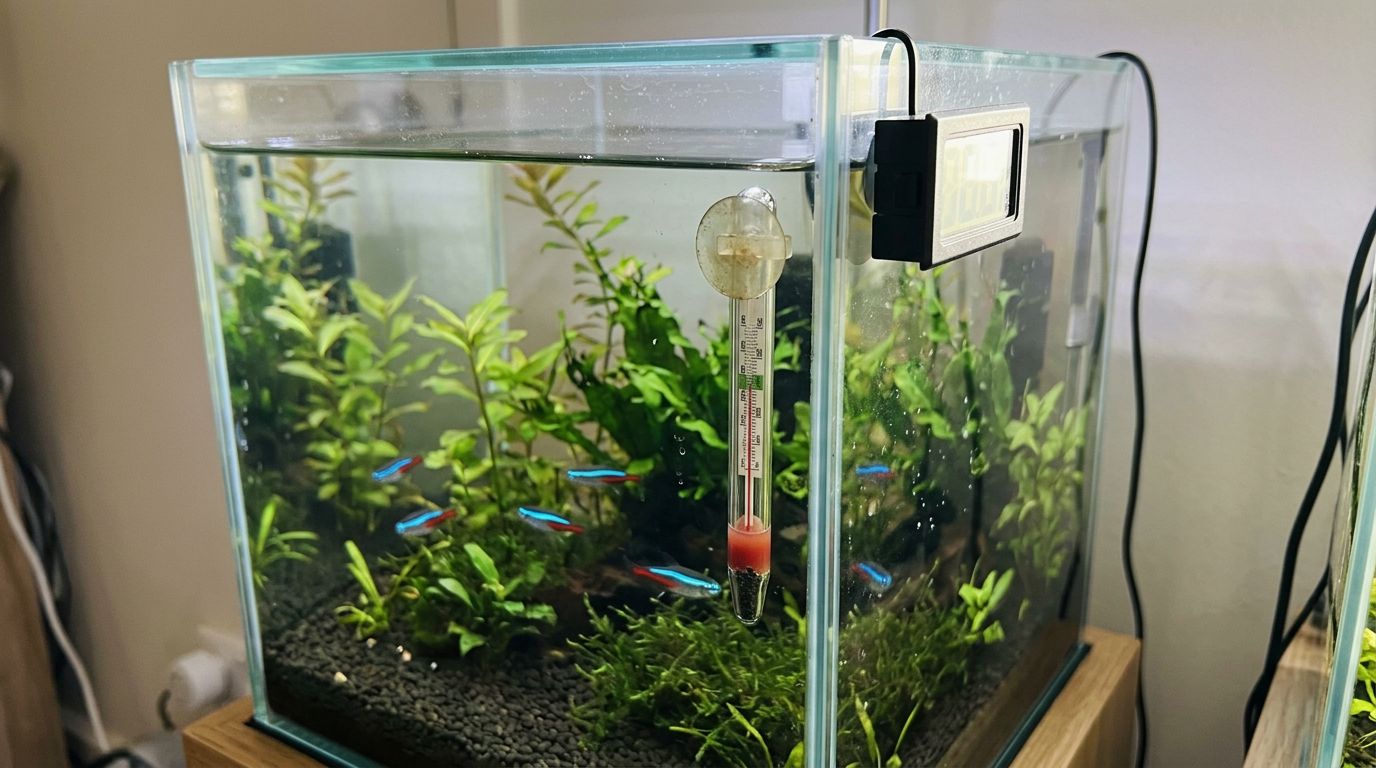
"Aren't all thermometers basically the same?" "I have a heater, so I don't really need to check, right?" Plenty of fishkeepers thought that until the morning they touched the glass and found it cool. Water temperature moves every day, and every heater fails eventually. The takeaway of this article: choose a thermometer you will actually look at every day, read it at the same time each day, and write the number down. Below we cover the types, where to mount one, and what the daily log does for you.
First, know the target range and the danger zone
Before choosing a thermometer, be clear about what you are looking for. For freshwater tropical and planted tanks the guidelines are:
- Comfortable range: 22-28°C (72-82°F), or 22-26°C for planted tanks
- Danger zone: 30°C and above, where oxygen drops and ammonia becomes more toxic
- How often to check: daily
The comfortable range is wider than many people expect, so a reading of 25°C today and 24°C tomorrow is nothing to worry about. What you are watching for is whether you are outside the range and whether it moved suddenly.
Digital or analog?
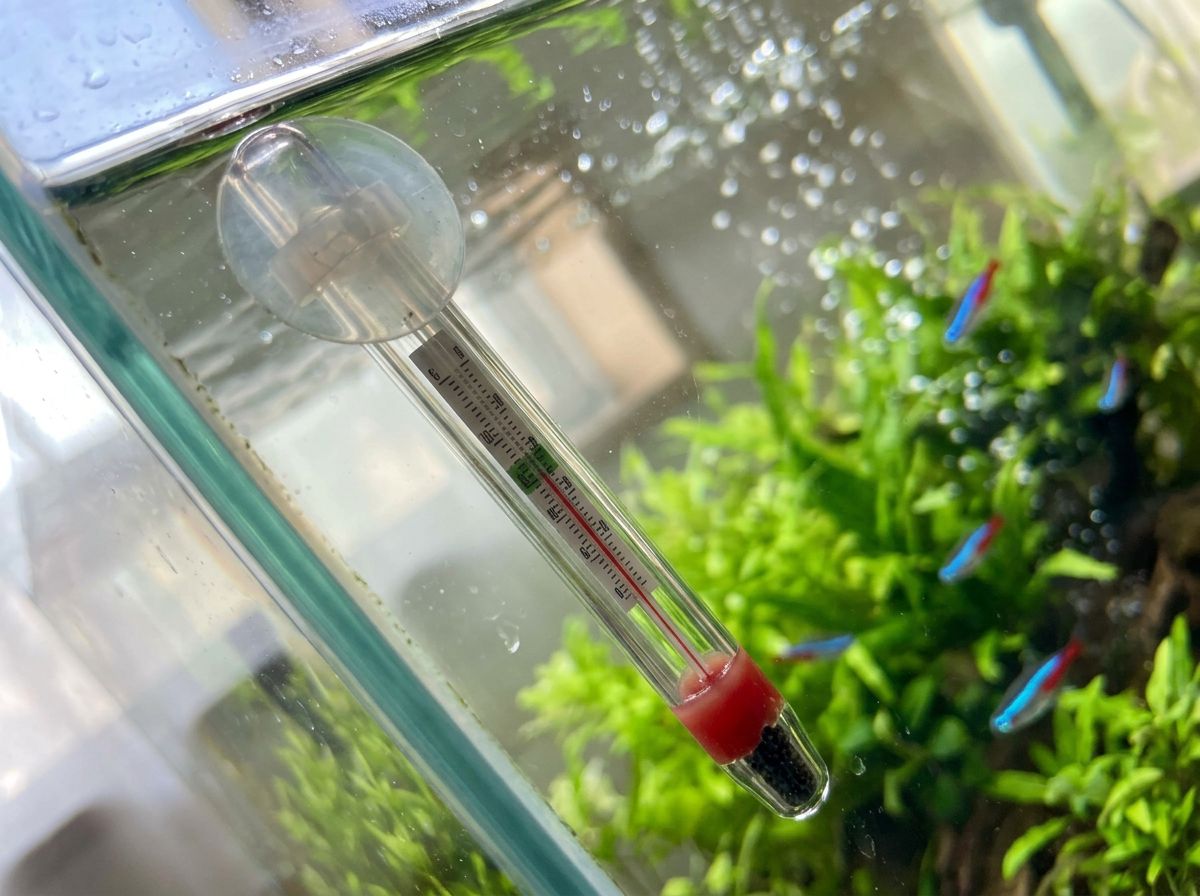
Thermometers fall broadly into digital models and analog ones (the classic liquid-filled glass strip, for example). Neither is the "right" answer. Knowing the general differences and then choosing the one you'll look at every day is the practical approach.
Digital
- Shows a number, which is easy to read even from across the room
- Most have a probe in the water and a display mounted outside the tank
- Needs a battery. When it dies, you lose your reading until you replace it
Analog (glass strip, suction-cup type, etc.)
- No power required, simple construction
- You read a scale, so it can be harder to read at an angle or from a distance
- Usually inexpensive, which makes it a convenient backup
Whichever you pick, don't take a single reading on faith. Units can disagree with each other, so placing two side by side, or checking against another thermometer you already own, gets you to a point where you can trust the number.
Placement changes the temperature you see
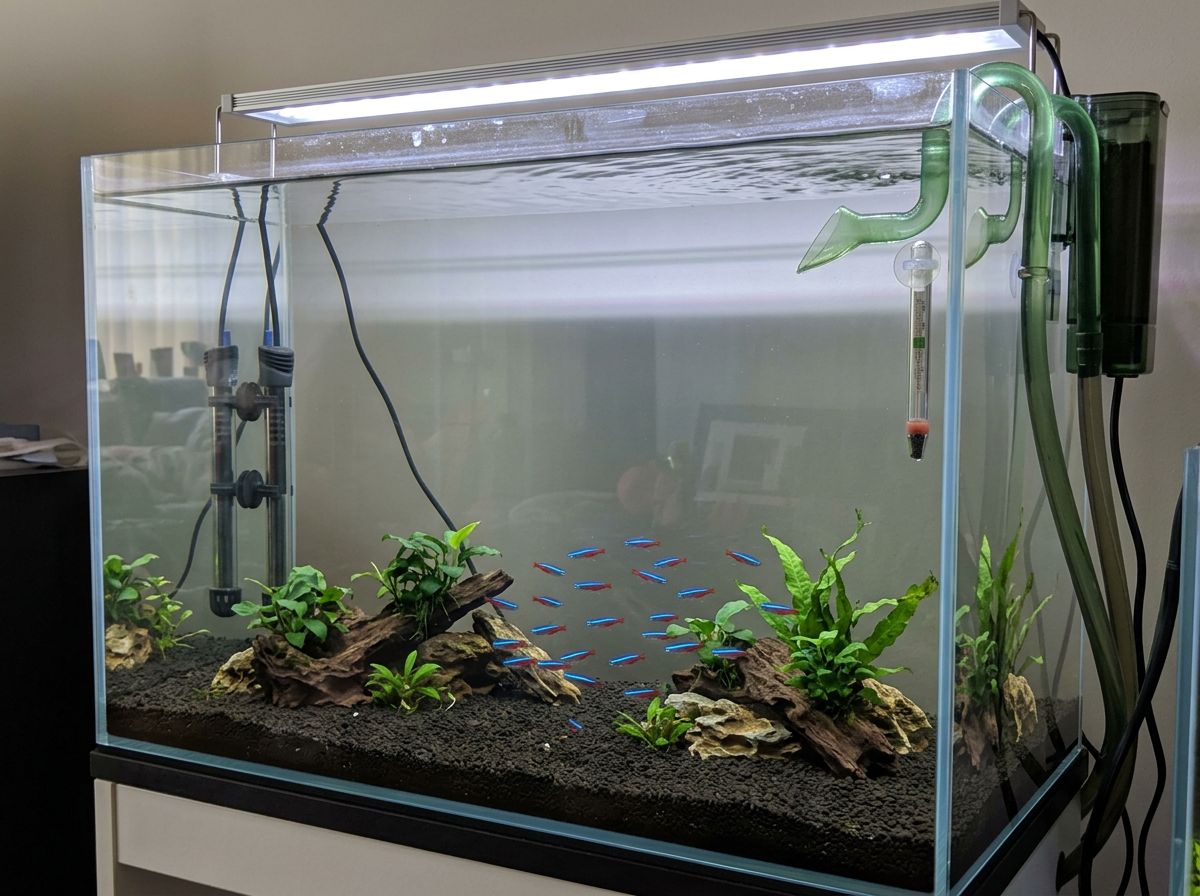
Even within one tank, temperature varies from spot to spot. What you want is the temperature where the fish actually swim.
- Not right next to the heater: you'll be reading freshly heated water, which runs warmer than the tank as a whole
- In the flow: somewhere the filter output keeps water moving gives you a reading closer to the tank's average
- Where you'll see it: mount it so you can read it from the front. Tucked behind the hardscape or near the bottom, it stops getting looked at
- Out of direct sun and light heat: a digital display sitting directly under the light fixture can read higher than reality
Visibility is easy to underrate, but it is the single biggest factor in whether the daily check actually happens.
A daily log is your early warning for heater failure
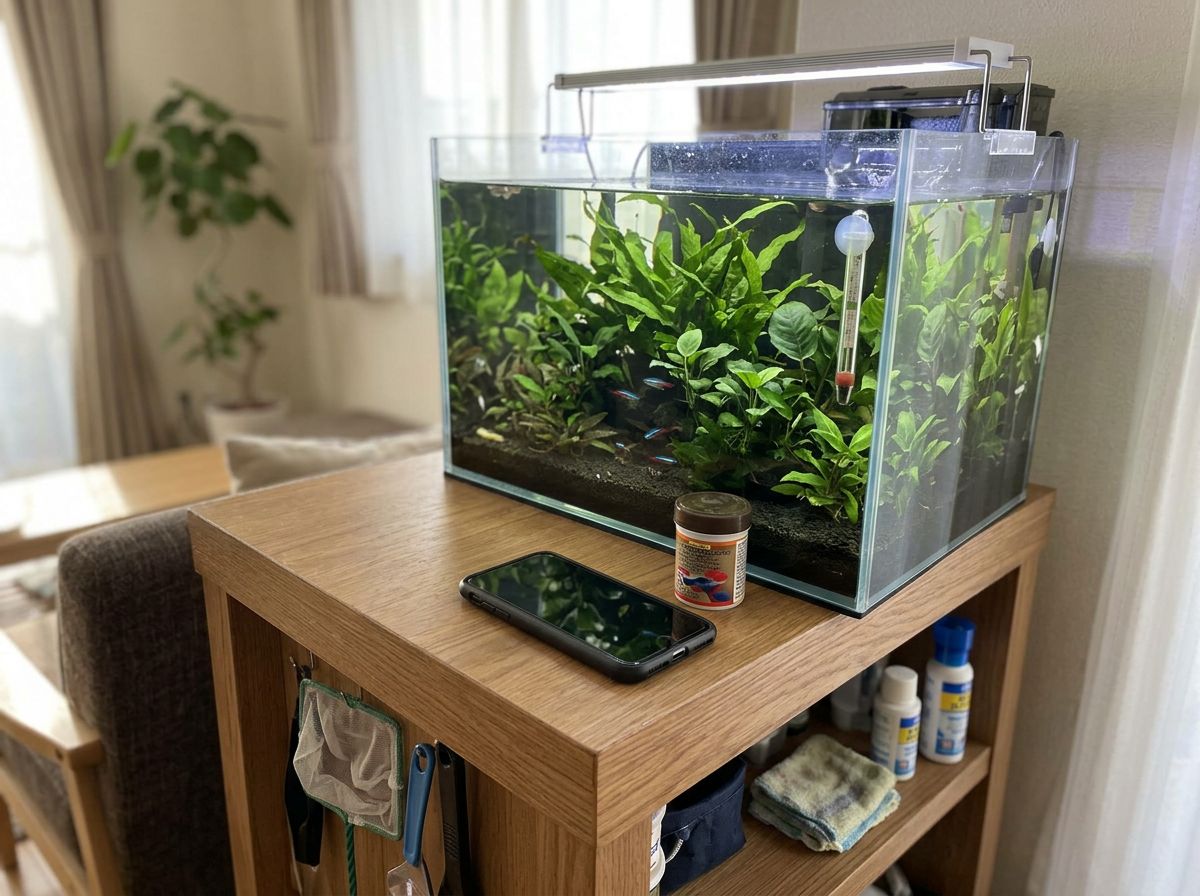
Heaters fail in one of two ways: stuck on, or not coming on at all. Both are serious for livestock. The tricky part is that you can't tell by looking at the heater. Checking the temperature every day is, in practice, how you verify the heater is working.
A daily record lets you notice things like:
- The actual temperature drifting away from the set point (a sign the heater is aging; manufacturers typically suggest replacing after about a year)
- A sudden drop or jump compared with yesterday (rapid change is a major stressor for fish)
- Whether the tank is holding temperature as the room gets colder
The trick to logging is to check at the same time every day. Tie it to a fixed routine, like right before the morning feeding, and it is hard to forget. Writing one number takes less than a minute.
FAQ
Is one thermometer enough?
You can run with one, but when a reading seems off you'll have nothing to compare against. Keeping a cheap analog unit as a backup lets you work out on the spot whether the thermometer drifted or the water really changed.
Some days it creeps just past 28°C. Is that an emergency?
The danger zone is 30°C and above. Slightly over 28°C calls for watching the trend, and if it keeps rising, looking for causes such as lighting duration or room temperature. Keep in mind that planted tanks have a slightly lower target of 22-26°C, so watch your plants too.
Do I only need to worry in winter?
Temperature problems aren't limited to winter cold. Summer heat pushes tanks toward the 30°C danger zone, and in spring and autumn the gap between daytime and nighttime temperatures widens. A year-round daily check is the best preparation for all of it.
Summary
- Target 22-28°C (22-26°C for planted tanks); 30°C and above is the danger zone
- Digital or analog both work. Pick the one you'll look at daily, and cross-check with a second unit
- Mount it away from the heater, in the flow, where you can see it
- Log at the same time every day. That is how heater failures get caught early
Temperature is the simplest record you can keep: one number a day. If you track it in the app, Aquarium rates each reading green, yellow, or red against the target range and shows the change from yesterday at a glance.