How Long Does It Take to Cycle a Tank? The 4-6 Week Timeline
New tanks usually take 4-6 weeks to cycle. Here's the week-by-week ammonia and nitrite curve, the three signs the cycle is done, and what to do meanwhile.
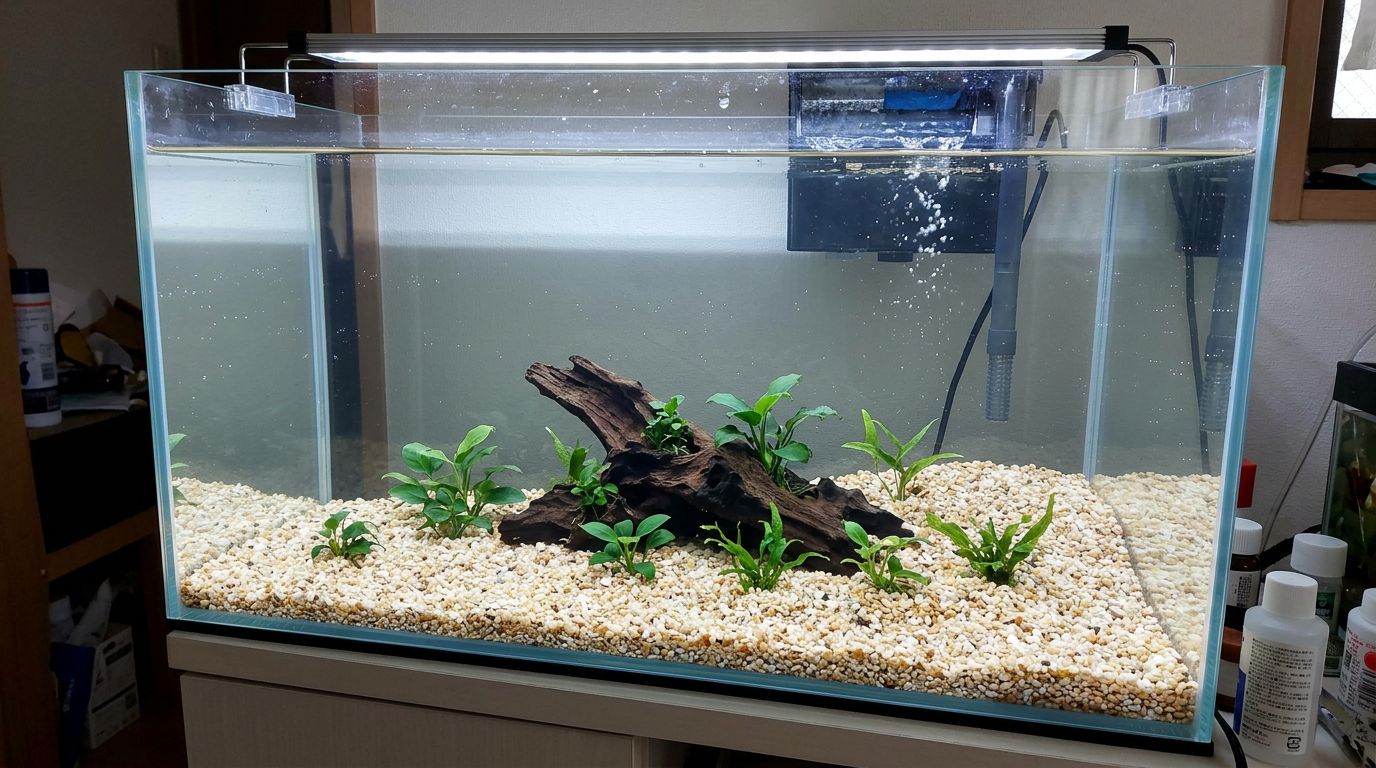
"The tank is set up — so when can I add fish?" The waiting is the hardest part of starting an aquarium. The short version: a new tank typically takes 4-6 weeks to cycle, and it's done when ammonia and nitrite are back to 0 the day after you add an ammonia source, nitrate has risen above where it started, and that holds for several days. This article walks through what's happening in the water during those weeks and how to tell when you've actually made it.
What the nitrogen cycle is: ammonia to nitrite to nitrate
Fish waste, uneaten food, and decaying plant matter all release ammonia. Ammonia is highly toxic to fish: the target is 0 mg/L, and 0.25 mg/L or more is dangerous territory.
A brand-new tank has almost none of the bacteria that break ammonia down. Over time, these bacteria colonize your filter media and substrate, and a chain reaction takes shape:
- Ammonia (very toxic) is converted by bacteria into nitrite
- Nitrite (toxic) is converted by a second group of bacteria into nitrate
- Nitrate (nearly harmless) accumulates in the tank and is removed by water changes and plants
That chain is the nitrogen cycle. "Cycling" a tank simply means growing enough bacteria for this process to run reliably.
The 4-6 week timeline, week by week
Expect 4-6 weeks for a cycle to complete. Depending on conditions it can be as short as about two weeks or stretch to several months. A typical run looks like this:
- Week 1: Ammonia peaks. There aren't enough bacteria yet to process it
- Weeks 2-3: Ammonia starts dropping and nitrite spikes. This is the most dangerous stretch of the whole cycle
- Week 3-4 onward: Nitrite falls, both ammonia and nitrite approach zero, and nitrate begins to register
The key point: falling ammonia does not mean you're safe. The nitrite peak that follows is the real hurdle. In a tank with fish, any detectable nitrite calls for a small water change the same day and daily testing until it is back to 0 (above 0.5 mg/L is the danger zone).
Three signs that your cycle is finished
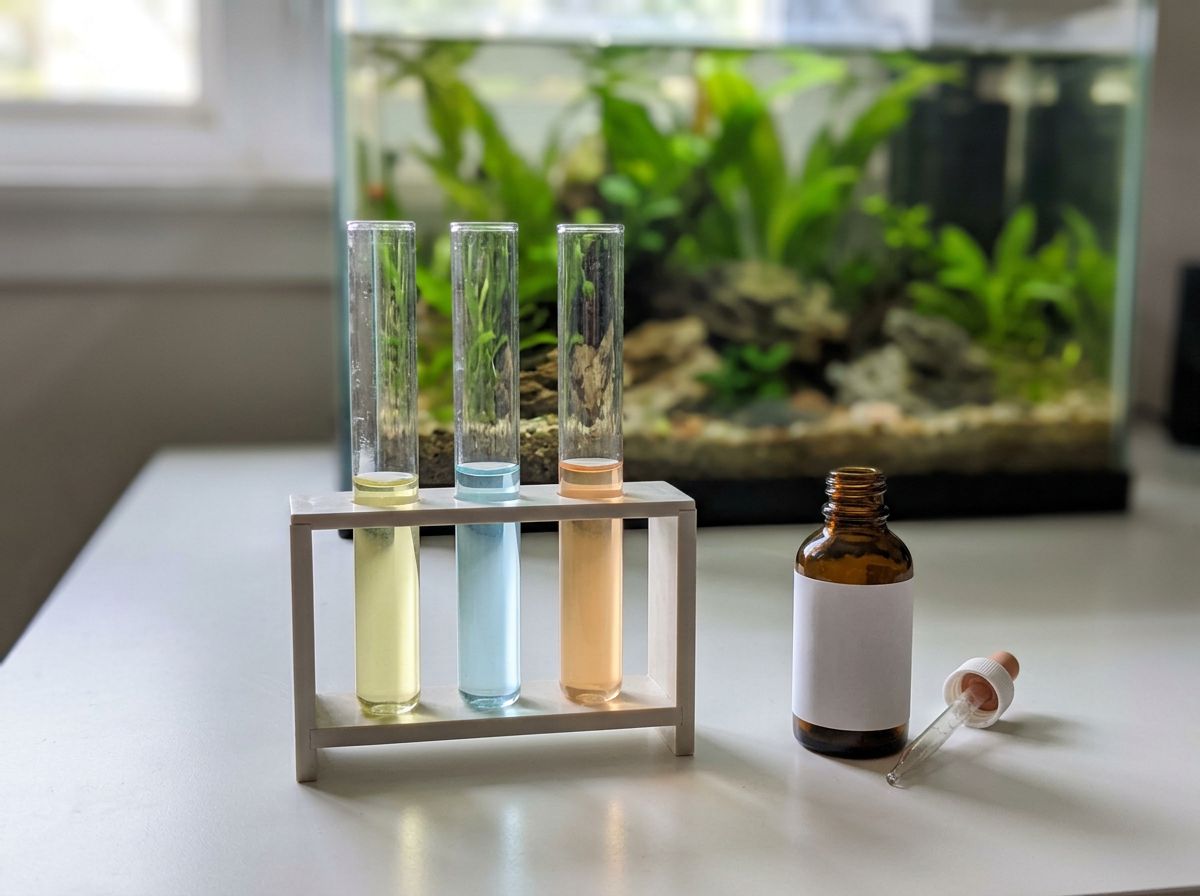
You can't see a finished cycle. Crystal-clear water can still carry a nitrite spike. The only way to know is to test. With an ammonia source going in (bottled ammonia or a small amount of fish food), you're looking for all three of these conditions holding together for several days:
- Ammonia at 0 mg/L the day after you add the ammonia source
- Nitrite at 0 mg/L at the same reading
- Nitrate detectable and higher than where you started (your tap water), which is proof that ammonia is being processed all the way through
A tank that has only had water running in it reads 0 and 0 from day one, so those zeros tell you nothing. And never dose bottled ammonia into a tank that already has fish in it; there, the fish and their food are the ammonia source.
A single zero reading doesn't count. It's common to see zero one day and a positive reading the next, so wait for the same result across several consecutive days before calling it done. The 4-6 weeks is only a guide.
During cycling, test ammonia and nitrite daily (weekly is fine once the tank is stable). Lining up those daily readings shows you exactly where your tank is on the curve, such as "this is my nitrite peak." The Aquarium app flags each reading green, yellow, or red, so if you track it in the app the trend is easy to follow.
What to do, and what not to do, while cycling
Do
- Test ammonia and nitrite every day
- If fish are in the tank and either one shows up, do a small water change (10-30%) the same day and keep testing daily until it is back to 0. If the reading is still in the danger zone after the change (ammonia 0.25 mg/L or more, nitrite above 0.5 mg/L), do a second small change that day and feed less. Always dechlorinate new water and match its temperature to within 1-2°C (2-4°F) of the tank
- Once the cycle is done, add livestock gradually, a few at a time. Adding a lot at once overwhelms the bacteria and triggers a fresh ammonia or nitrite spike
Don't
- Rinse filter media under tap water during cycling. Chlorine kills the bacteria you're trying to grow — rinse in tank water if you must
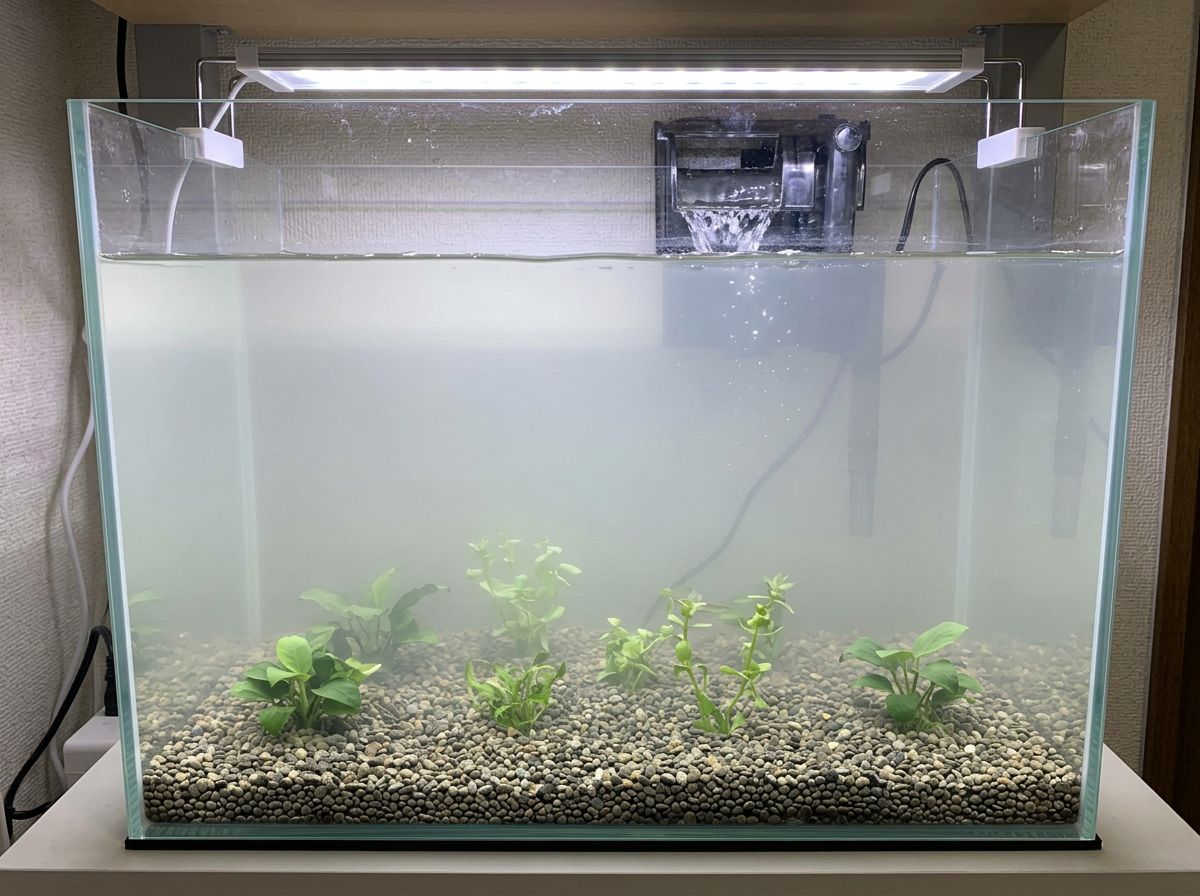
- Tear down and clean the filter because the water looks cloudy. Early cloudiness is usually a bacterial bloom that clears on its own within 1-2 weeks
- Overfeed. If fish are present, one or two feedings a day, eaten within 2-3 minutes, is plenty
Fishless cycling, where you grow the bacteria before any fish go in, is the recommended approach. If fish are already in the tank, daily testing and frequent water changes are non-negotiable.
FAQ
Is there a way to speed up cycling?
Seeding the tank with water or, better, used filter media from an established, healthy aquarium is considered the most reliable shortcut. Bottled bacteria products are best treated as a supplement rather than a replacement. Either way, confirm the result with your test kit rather than assuming it worked.
It's been more than 6 weeks and ammonia or nitrite still won't go away
Some tanks genuinely take months, so don't panic. Check whether you're adding too much food or ammonia source, and whether the filter media has been rinsed in tap water. Because warmer water and higher pH increase the share of ammonia in its most toxic form, keep diluting with water changes while you wait if fish are present.
The water is clear — can I add fish now?
Clarity and water quality are two different things. Nitrite is colorless, so the water looks perfectly fine even at the peak. Go by the three conditions above (ammonia 0 and nitrite 0 the day after adding an ammonia source, and nitrate higher than where you started), not by looks.
Summary
- Cycling means growing the bacteria that turn ammonia into nitrite and then nitrate. Budget 4-6 weeks
- Typical curve: ammonia peaks in week 1, nitrite peaks in weeks 2-3 (the danger zone), both reach zero from week 3-4 on
- Done means ammonia 0 and nitrite 0 the day after adding an ammonia source, with nitrate above its starting level, for several days in a row
- Test daily while cycling. With fish in the tank, do a small water change the same day anything shows up. Stock slowly afterward
Whether you use a notebook or an app, keep your daily readings somewhere you can see them side by side. Those first few weeks are the best possible time to build a logging habit that will serve you for years.