Overwintering Medaka Outdoors: When to Stop Feeding and How to Prevent Freezing
Outdoor medaka need less food below 15°C and none below 10°C. Skip water changes, keep 15-20 cm of depth, never break the ice.
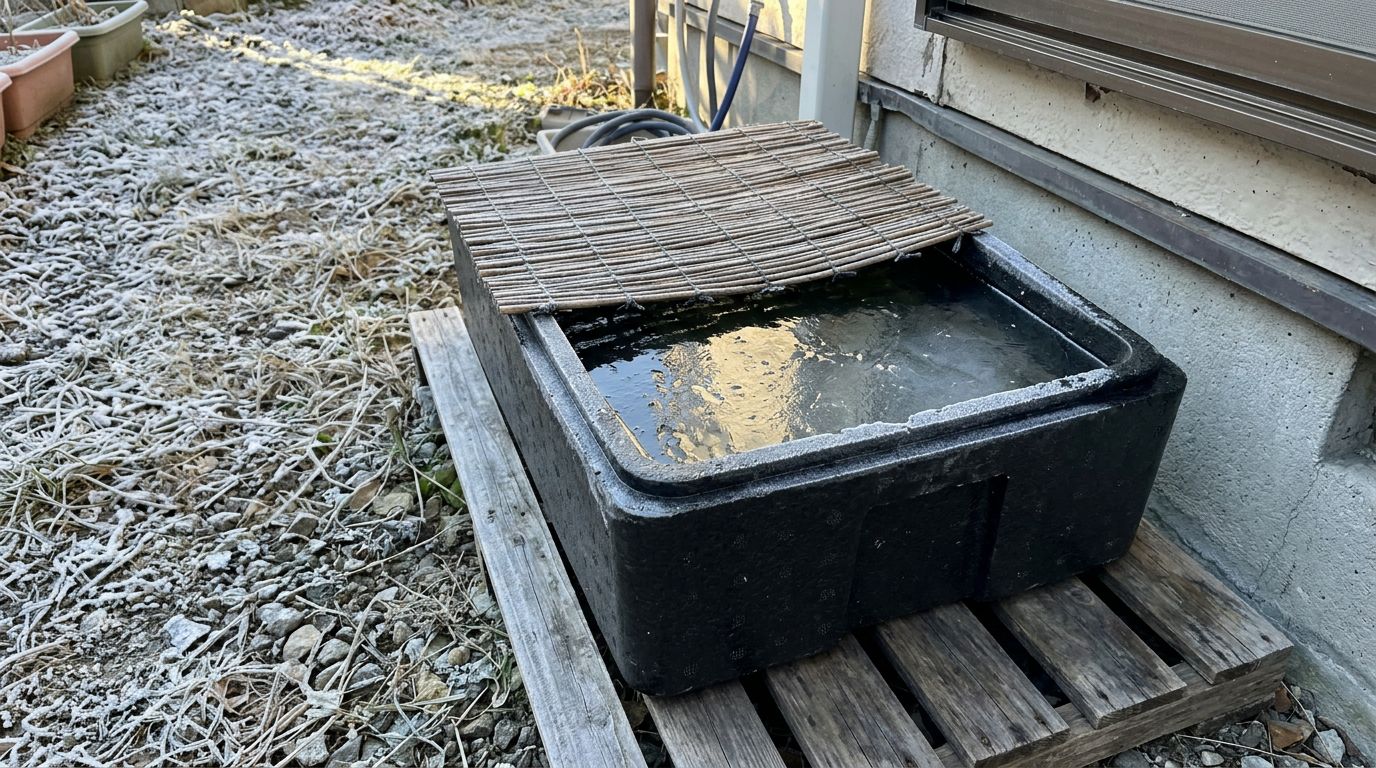
"It's getting cold. Are my outdoor medaka going to be okay?" "How long do I keep feeding?" Every medaka keeper asks this before their first winter. The short answer is that winter is the season where doing almost nothing is the right call. Cut feeding back at 15°C and stop below 10°C, skip water changes and only top off, and leave any ice alone. This article lays out those thresholds and the prep work that belongs in autumn.
Winter is decided in autumn: depth and placement
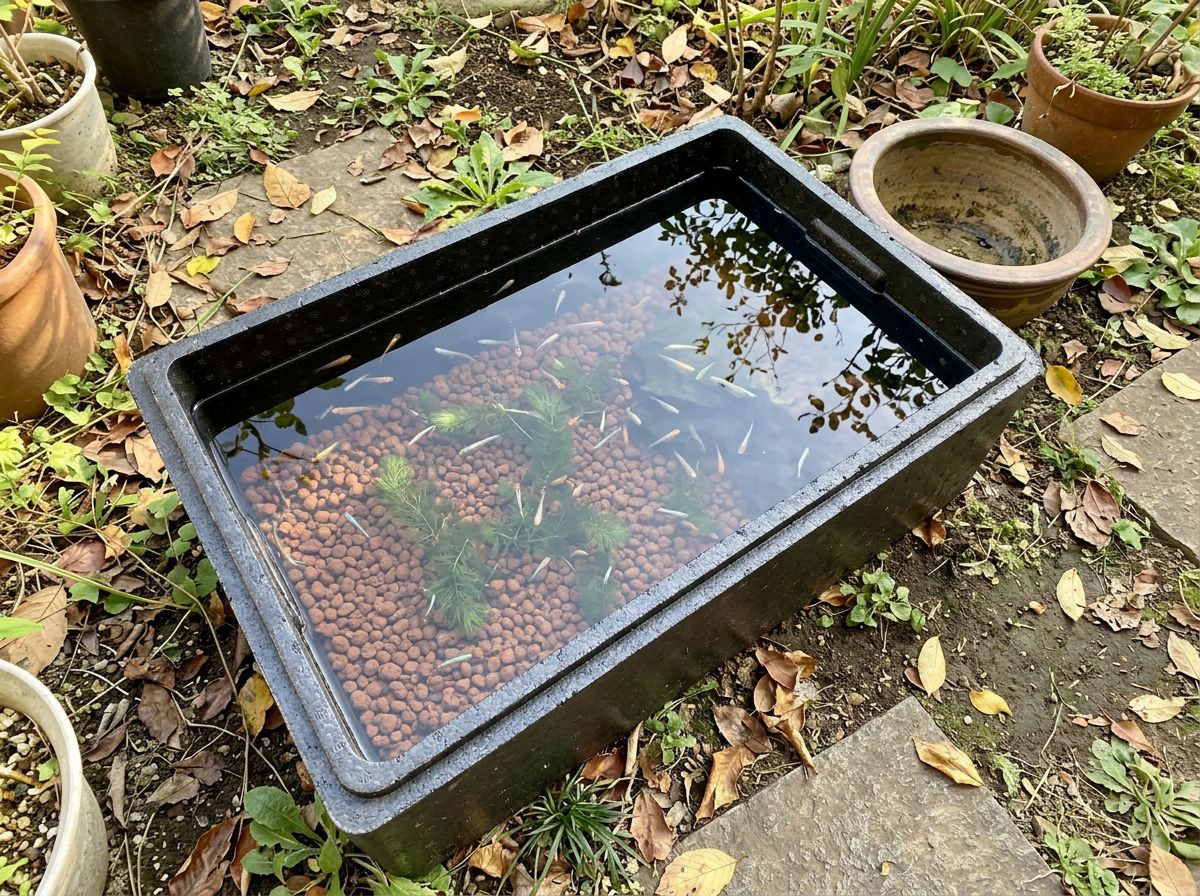
The thing that actually kills medaka in winter is not cold as such. It is the container freezing solid. A thin skin of ice on the surface is fine; the fish sit it out at the bottom.
So preparation is about making the container hard to freeze through.
- Water depth of at least 15 cm (6 in), ideally 20 cm (8 in) or more. Volume of 10 L (2.6 gal) or more, and 20 L (5 gal) or more if you can
- Foam (polystyrene) boxes insulate well and are the classic overwintering container. If you'd rather keep your current tub, wrapping the sides in foam board also helps
- Placement: a sunny spot out of the north wind, such as a south-facing wall or under the eaves. Don't set it straight on concrete; a board or slatted stand underneath stops cold rising from below
- Cover about two thirds of the surface with a reed screen or lid, never all of it, so gas exchange continues
Do any container swaps and big cleanups in autumn, while the water is still above 15°C (59°F). Moving a container in midwinter is hard on the fish.
Cut feeding at 15°C, stop below 10°C
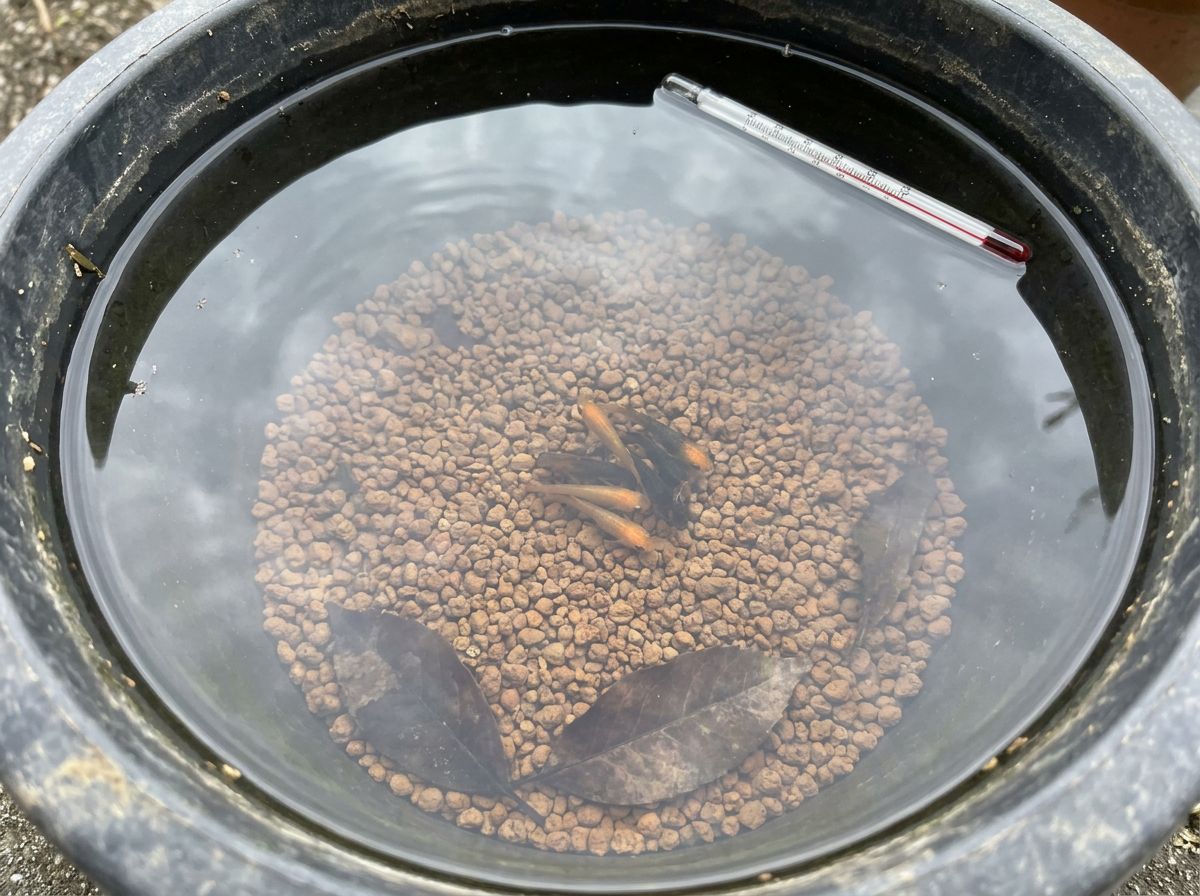
Medaka are cold-blooded, so digestion and activity slow as the water cools. Feeding fish that aren't eating just leaves food rotting on the bottom. The thresholds most keepers use:
| Water temperature | Feeding |
|---|---|
| Above 20°C (68°F) | 1-2 times a day, what they finish in 2-3 minutes |
| 15-20°C (59-68°F) | Once a day, what they finish in 1-2 minutes |
| 10-15°C (50-59°F) | Generally none. A tiny pinch at midday on a warm day if they come up for it |
| Below 10°C (50°F) | Nothing |
This table is for adults wintering outdoors. Don't apply it to fry under wintering size or thin fish that you have brought indoors (see "Which fish can overwinter outside" below). The figures are guidelines and shift with container size and climate. What matters is reading both the thermometer and whether the fish come up for food. If you have no thermometer, "they don't come to the food" is your signal to stop.
This is also why it pays to log the temperature at the same time each day even in an unheated tub. You'll know the date you dropped below 15°C and below 10°C this year, and next winter's decisions get much easier.
No water changes in winter, only top-offs
Once the water is below 10°C, stop changing water. A dose of cold new water moves the temperature far more than dirty water hurts, and with no feeding the water barely fouls anyway.
All you do is top off what evaporates.
- Match the new water to within 1°C (2°F); water left outside in a bucket to acclimatize works well
- Don't pour it in. Float a board on the surface and trickle onto that, or run it slowly down the side
- Check the level about once a week. A low level freezes through more easily
Leave sunken leaves alone rather than stirring the bottom; net out only what floats.
Leave the ice alone
If the surface freezes, let it thaw on its own. Breaking it sends a shock through the water and loose shards can injure fish.
Only if the container is shallow and the ice thickens day after day should you intervene, and then by setting a bottle of hot water on top of the ice to melt it slowly. Never pour hot water in; that is a temperature shock.
Remember that forecasts quote air temperature at 1.5 m above ground. On clear, still nights the surface of your tub gets colder than the forecast. A forecast low below 3°C (37°F) is the cue to pay attention. Some keepers bring containers into an entryway only on nights when lows below minus 5°C (23°F) are forecast. That is an exception to the "don't move the container" rule, so carry it gently without sloshing and put it back in the same spot the next morning.
Which fish can overwinter outside
Fry born in autumn can't make it outdoors unless they've grown enough. The usual line is 1.5 cm (0.6 in) body length, ideally 2 cm (0.8 in). Fry hatched from late September onward often don't reach 1.5 cm in time, so bring them indoors to raise them. These fish do not yet have the reserves to go through winter unfed, so don't apply the feeding table above; give small amounts they can finish, watching the water temperature and how they eat. Keeping the water warm enough is covered in keeping medaka indoors.
Even at a good length, thin fish, with a narrow back seen from above and no fullness to the belly, tend to fail the winter. Round-bodied "daruma" strains can also struggle outdoors and are safer inside.
What not to do in winter
- Keep feeding
- Change water or clean the bottom
- Break or poke the ice
- Net the fish to count them, or move the container
- Pour in cold water all at once
- Add new fish
Winter medaka just need to be left alone. Avoid peering in constantly and startling them.
FAQ
The fish came up to the surface on a warm day. Can I feed them?
You don't need to. If you want to, offer a tiny pinch of powdered food between about 11 am and 2 pm when the day is warmest. Nothing in the evening or on cold days.
When do I start feeding again in spring?
Once daytime water temperature climbs above 10°C and the fish start hanging near the surface, restart with a very small amount, and only at midday on warm days. Their digestion is still sluggish after winter, so don't jump back to full rations. Return to the normal routine, and resume water changes, above 15°C, starting with a small change of about one fifth rather than a full-size one.
Should I bring them indoors instead?
Healthy adults in a container with enough depth and volume are fine outside. Small fry, thin fish, daruma strains, or a shallow container are reasons to move indoors. Well-grown adults kept indoors and unheated are managed the same way: feed by temperature. For fry and thin fish, don't apply the feeding table; keep giving small amounts by temperature and appetite.
Summary
- The real danger is freezing solid. Prevent it with 15-20 cm of depth, foam insulation and shelter from the north wind
- Cut feeding at 15°C, stop below 10°C. Read the thermometer and the fish
- No water changes in winter, top-offs only, matched within 1°C and added slowly
- Never break the ice. Melt it with a bottle of hot water if you must
- Fish need to be 1.5 cm or longer to overwinter outside; smaller ones come indoors (the feeding table is for outdoor adults, not for fry or thin fish brought inside)
The day you drop below 15°C and the day you drop below 10°C land at roughly the same time every year. Log daily temperature in the Aquarium app and next year's winter prep date comes from your own container's data.