Aquarium Maintenance Schedule: Daily, Weekly and Monthly Tasks
A full aquarium maintenance schedule: daily checks, a weekly 10-30% water change, monthly filter cleaning, and yearly jobs, plus three rules to follow.
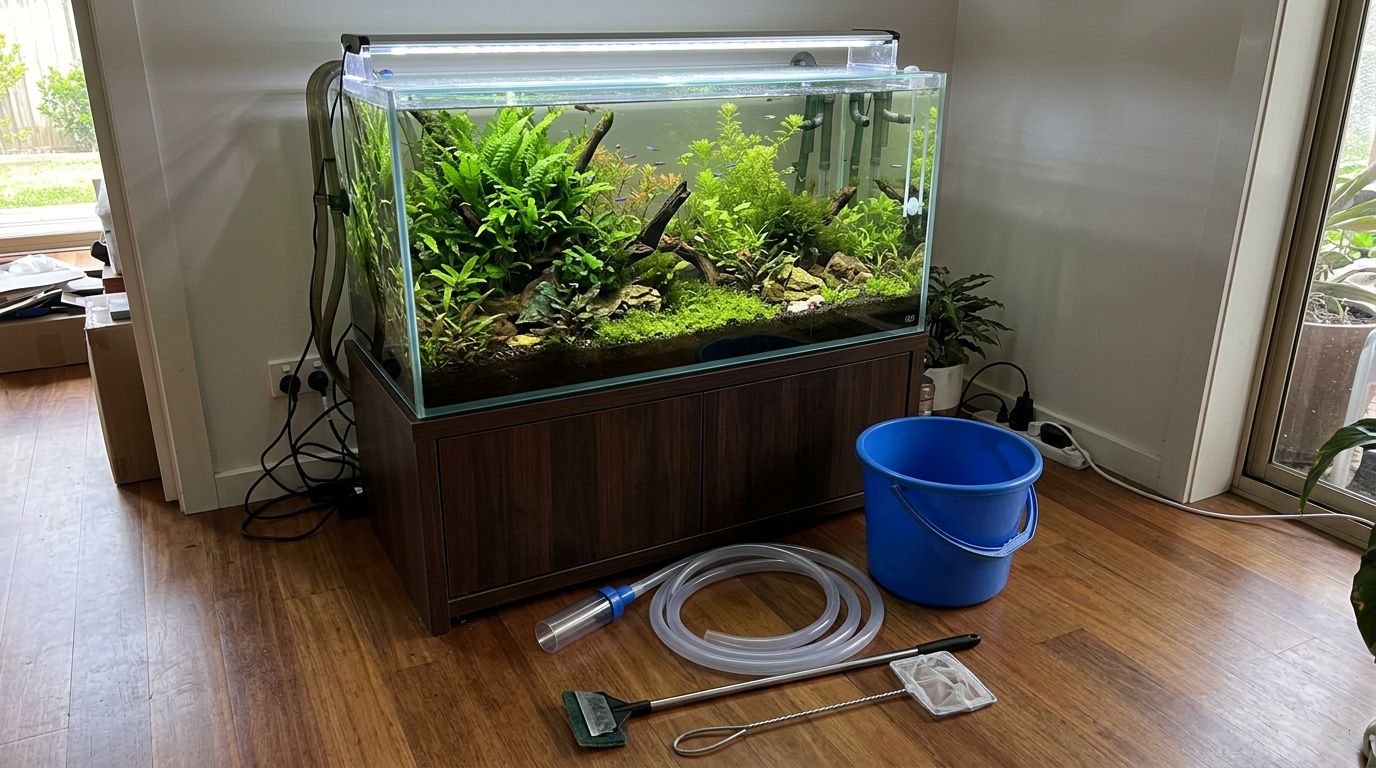
"What am I actually supposed to do, and how often?" Water changes, cleaning, filters and testing all come up separately, and when you are starting out it is hard to see the whole picture. It becomes manageable once you sort the jobs into five tiers: daily, weekly, monthly, every few months, and every six months to a year. In terms of priority, daily observation and temperature checks, plus the weekly water change, come first. This article lists the tasks by frequency and adds three rules worth following.
The schedule at a glance
Here is the whole thing in one table. All figures are general guides and shift with tank size and stocking.
| How often | What to do |
|---|---|
| Daily | Observe livestock (appetite, swimming, body surface), check temperature, check equipment, remove uneaten food |
| Weekly | 10-30% water change plus cleaning part of the substrate, wipe algae off the glass, test the water |
| Monthly | Clean small filters (on a different day from the water change), replace filter floss and activated carbon, trim plants |
| Every 2-6 months | Clean canister filters (3-6 months), partially replace biological media (from 4-6 months), replace fluorescent tubes (6 months to 1 year) |
| Every 6-12 months | Replace the heater (about 1 year, per manufacturers), decide on replacing aqua soil (6 months to 2 years), check test kit expiry |
The sections below add a few notes for each tier.
Daily: observation, temperature, equipment, leftovers
Each daily task takes a minute or two and fits around feeding.
- Observe the livestock: appetite, swimming and body surface. Adding fins and breathing helps catch disease early. See five things to check every day
- Check the temperature: the target for a tropical tank is 22-28°C (72-82°F), or 22-26°C (72-79°F) for a planted tank, and 30°C (86°F) or above is the danger zone. A daily reading also catches heater failures early. More in choosing a thermometer and logging temperature daily
- Check the equipment: is water coming out of the filter? Are the heater and lights working?
- Remove uneaten food: feed once or twice a day, what the fish finish in two to three minutes, and take out anything left. Leftovers every time mean the portion is too big. See how much and how often to feed
Of the five tiers, this is the one not to skip. Most aquarium problems show up first as a small day-to-day change.
Weekly: water change, glass, water tests
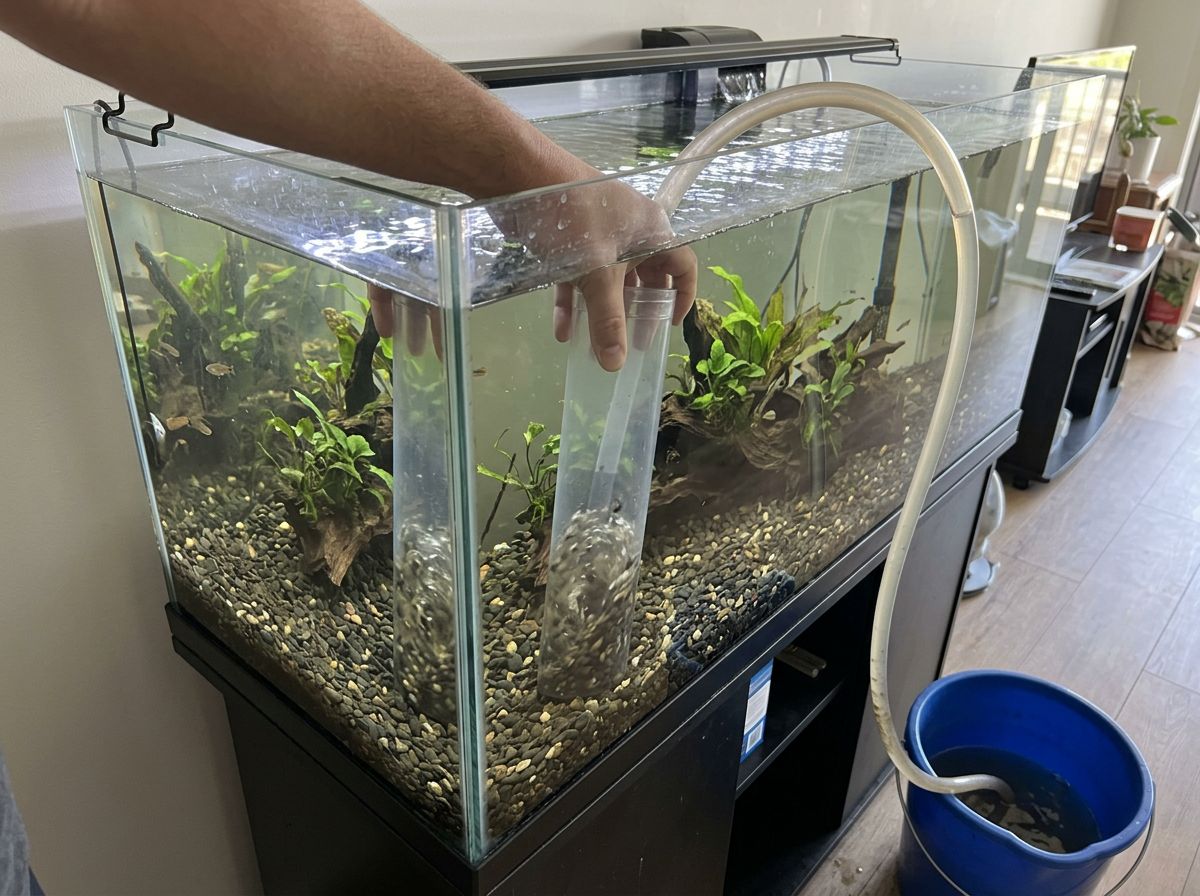
These are the jobs to set aside time for once a week.
- 10-30% water change: the standard is once a week. Frequent small changes avoid the sudden shifts that rare large ones cause. Dechlorinate the new water and match it to within 1-2°C (2-4°F) of the tank
- Clean part of the substrate while draining. You don't need to do the whole bed every time
- Wipe algae off the glass before it builds up
- Test the water: pH, ammonia, nitrite and nitrate weekly in an established tank. During cycling, test ammonia and nitrite every day
The sensible way to tune frequency and volume is to follow nitrate: change water if it passes 40 mg/L, and set the interval by how fast it rises.
Monthly: small filters, floss, trimming
Monthly work centers on the filter.
- Clean small filters: about once a month, on a different day from the water change
- Replace filter floss and activated carbon: roughly monthly consumables. Do this on a different day from the water change too, and leave the biological media alone that day. If floss is the only media in your filter, run two pads and change one at a time, or otherwise avoid making everything new at once
- Trim plants: algae and cloudy water are more likely after a trim, so keep an eye on the tank
- Test GH and KH: hardness is the monthly part of water testing
Every few months, and every six months to a year
The longer the interval, the easier it is to forget when you last did the job.
Every 2-6 months
- Clean canister filters: every 3-6 months
- Partially replace biological media: from 4-6 months onward. Never all at once; a third to a half at a time
- Replace fluorescent tubes: every 6 months to 1 year
Every 6-12 months
- Replace the heater: about 1 year, per manufacturer recommendations
- Replace the CO2 check valve and silicone tubing: about 1 year (tanks with CO2 injection)
- Decide whether to replace aqua soil: 6 months to 2 years
- Check test kit expiry: liquid kits last about 3 years; strips are short-lived once opened
None of these can be judged without knowing the date of the last replacement, so noting that date is part of the maintenance. The Aquarium app lets you set water changes, filter cleaning, heater replacement and more as recurring reminders, so managing your schedule in the app keeps the long-interval jobs from slipping.
Three rules to follow
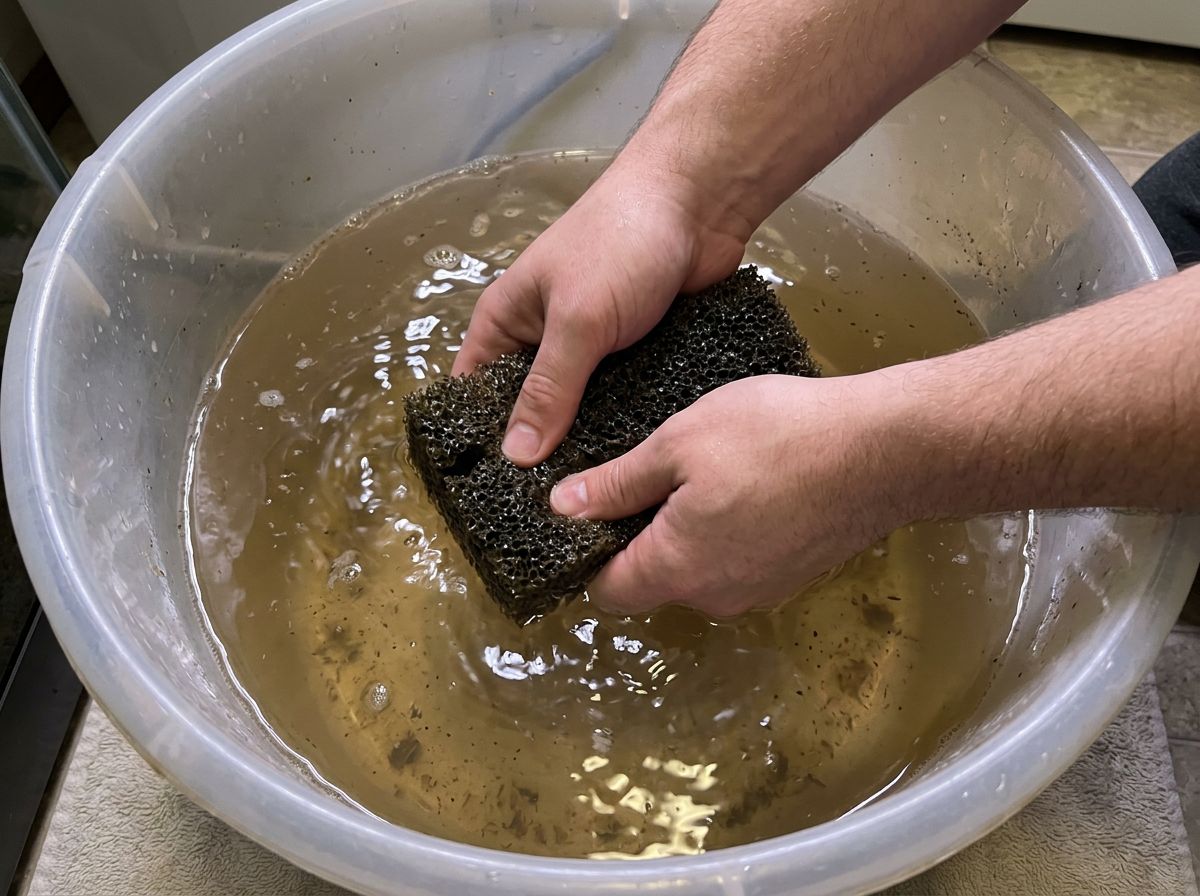
How you do the work matters as much as how often. Break any of these three and the maintenance itself degrades the water.
1. Don't change water and clean the filter on the same day
Doing both at once removes a large share of the bacteria and the water quality drops. Clean the filter, and replace floss, on a separate day from the water change.
2. Rinse media in tank water, and never replace it all at once
The chlorine in tap water kills the bacteria. Rinse media in water taken from the tank, and when replacing, do a third to a half at a time.
3. Don't dig deep into aqua soil
Vacuuming aqua soil deeply and roughly breaks the granules down. Clean the surface lightly. Gravel is fine to vacuum.
FAQ
I can't do all of this. What comes first?
Daily observation and temperature checks, and the weekly water change. The daily checks take the few minutes of feeding time and are the fastest way to notice trouble. The water change is the main way to remove the nitrate that keeps accumulating. For anything monthly or longer, pick dates and let reminders carry the load.
Is the schedule the same for every tank?
No, these are general guides. For water changes, a heavily planted, lightly stocked tank can manage on 15-20%, while a heavily stocked or high-light CO2 tank may need 30-50%. Testing nitrate weekly is the way to find the interval that suits your tank.
I changed water and cleaned the filter on the same day. Now what?
Test ammonia and nitrite every day for the next several days. Both should read 0 mg/L. If either is detectable, dilute it that day with a small 10-30% water change (dechlorinated and temperature-matched) and test daily until it is back to 0. If the reading is still in the danger range after the change (ammonia 0.25 mg/L or more, nitrite above 0.5 mg/L), do a second small change the same day and feed less. Next time, split the two jobs across different days.
Summary
- Daily: observation (appetite, swimming, body surface), temperature, equipment, uneaten food
- Weekly: 10-30% water change with partial substrate cleaning, glass, water tests
- Monthly: small filter cleaning and floss and carbon replacement (neither on water change day), trimming
- Every 2-6 months: canister filter cleaning (3-6 months), partial bio-media replacement (from 4-6 months)
- Every 6-12 months: heater replacement (about 1 year), test kit expiry and similar checks
- Three rules: no same-day water change and filter cleaning / rinse media in tank water and never replace it all / don't dig deep into aqua soil
Rather than trying to do everything perfectly, keeping up the few daily minutes and the weekly water change is the most reliable route to a stable tank.