Early Signs of Ich in Aquarium Fish and What to Do First
Flashing and salt-grain white spots are the classic early signs of ich. How to tell them from look-alikes, why to isolate first, and when to get help.
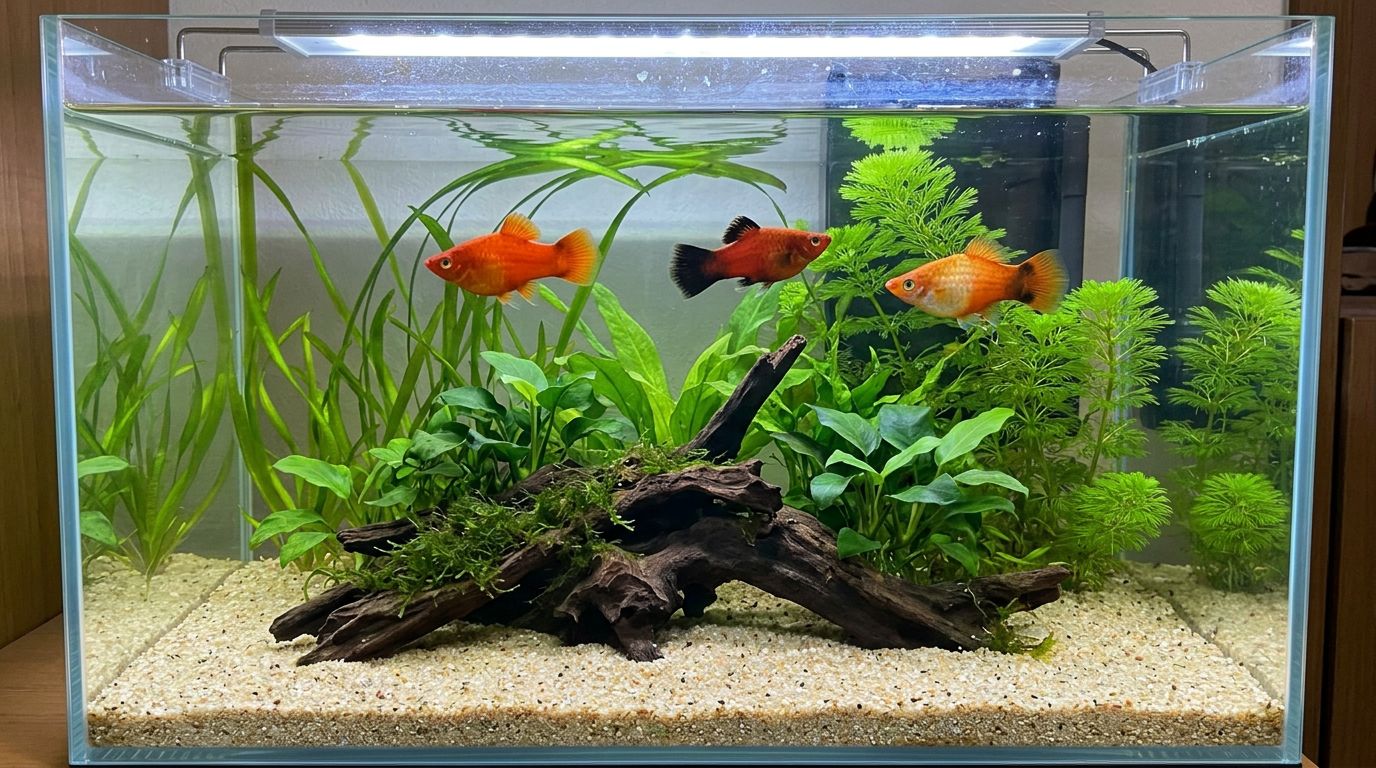
"I think I see a white speck on my fish." "It keeps scraping itself against the rocks." When that happens, ich (white spot disease) is usually the first thing that comes to mind, and because it is one of the best-known fish diseases, it is also one of the most alarming. This article covers how to recognize the early signs of ich and what to do first if you suspect it. The short version: don't rush to dose the main tank. Isolate the fish and observe.
A note before we start: this article does not diagnose or prescribe. Appearance alone is rarely conclusive, and if a fish gets worse you should consult a knowledgeable fish store.
The early signs ich is known for
Two signs are commonly associated with the early stage of ich:
- Flashing: the fish rubs or scrapes its body against gravel, rocks, or driftwood. This behavior sometimes appears before any spots are visible
- Salt-grain white spots: tiny white dots on the body or fins, as if the fish had been sprinkled with salt
Early on there may be only one or two spots, or they may be confined to a fin tip, which makes them easy to miss. Lighting the fish from the side and checking the whole body including the fins helps.
That said, white does not automatically mean ich. A cottony film (possibly fungus) or fin edges turning milky (possibly fin rot) can look similar at a glance. Distinct, grain-like dots that increase in number over a day or two are what raise the suspicion of ich, but treat it as a possibility, not a verdict.
What to look at to tell the difference
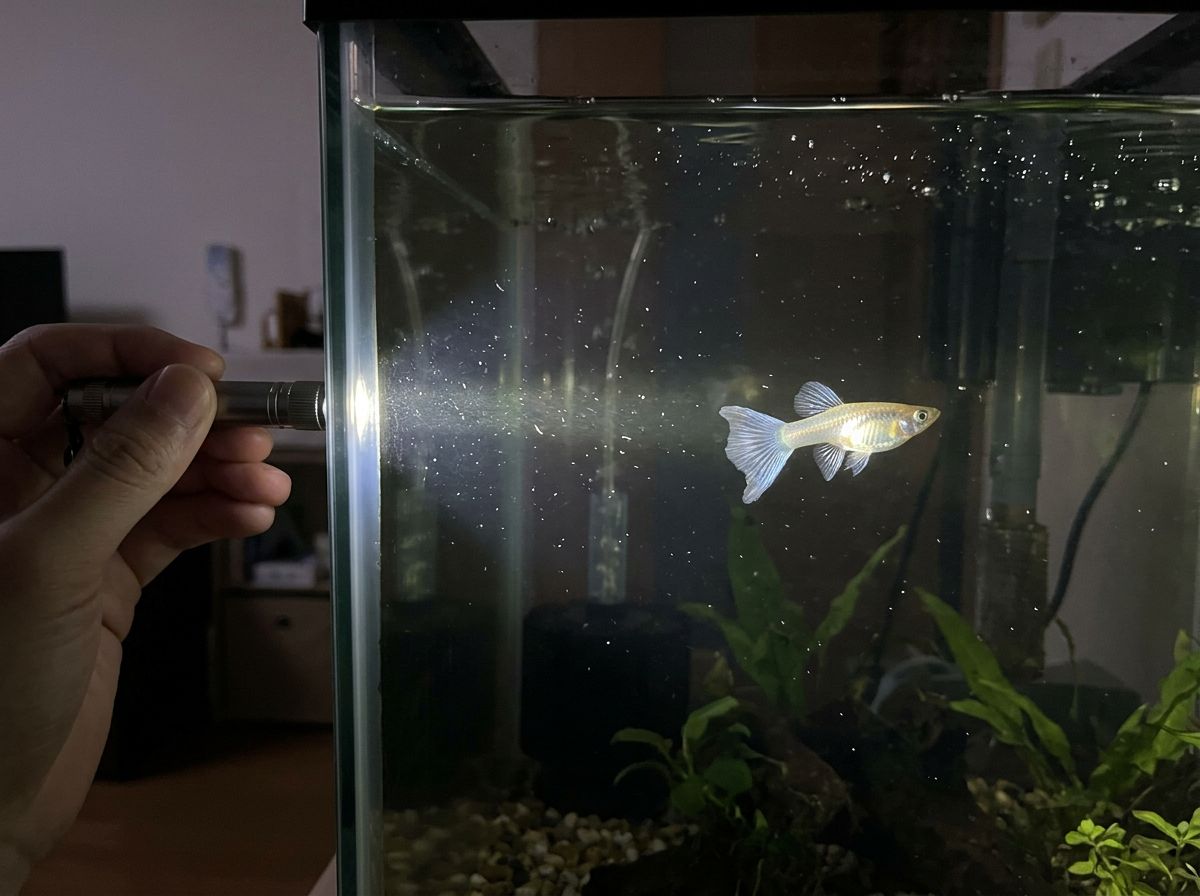
Even without a diagnosis, you can sharpen your observation. Go through the five daily feeding-time checks more carefully than usual:
- Appetite: still coming to eat, and with the usual enthusiasm?
- Swimming: flashing, clamped fins, hiding motionless in a corner
- Body: are there more spots than yesterday, and where?
- Fins: spots often show up here first, so watch the fins when they are spread
- Breathing: fast gill movement or gasping at the surface
What matters is not today's snapshot but the change since yesterday. Taking a photo gives you an objective way to tell whether the spots are multiplying or fading.
First step: isolate and observe
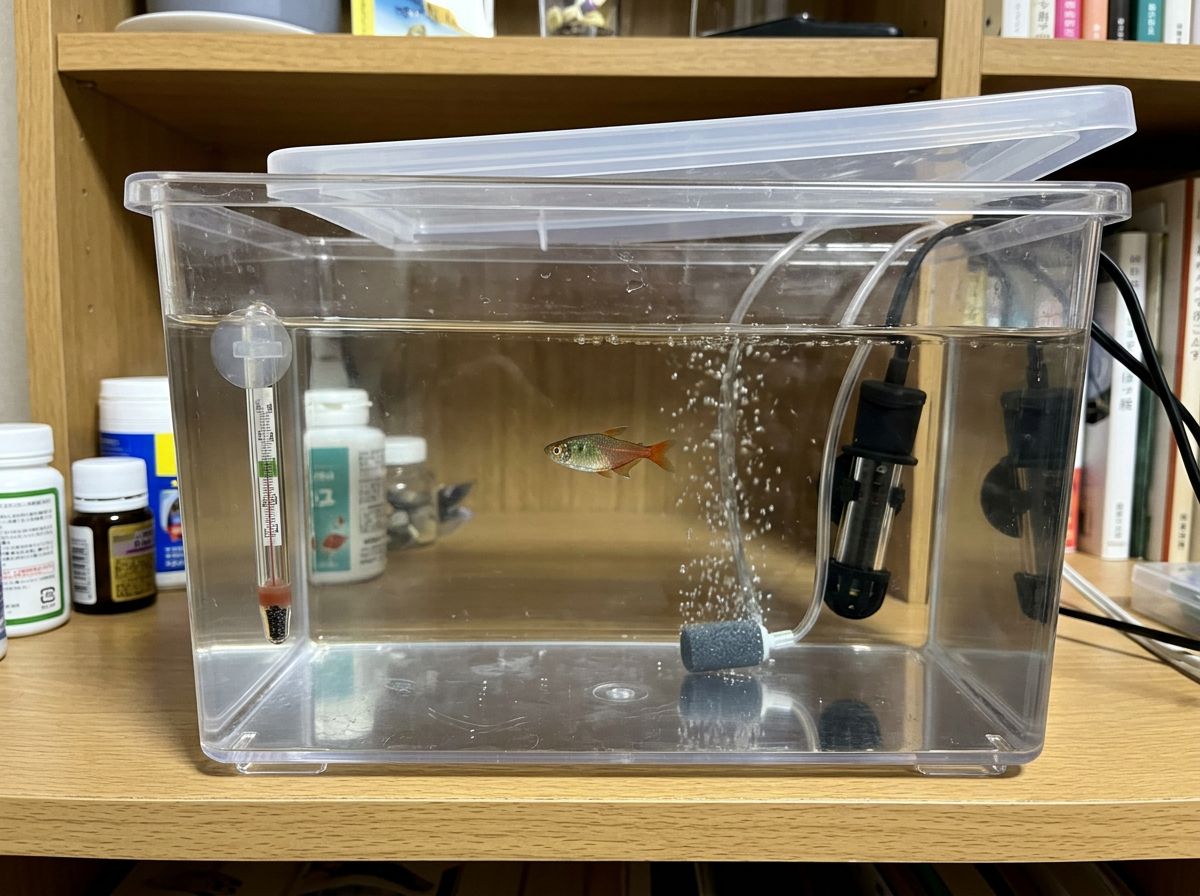
When ich is suspected, the usual first move is transferring the affected fish to a hospital tank.
- A small container is fine, but match the main tank's temperature and provide a heater and aeration
- Avoid temperature shock during the move (keep the difference within 1-2°C / 2-4°F)
- Isolation makes close observation easy, and if medication becomes necessary, the main tank stays untouched
Do not medicate the main tank directly. Medications can affect beneficial bacteria, live plants, shrimp, and other inhabitants, and can throw the whole system off balance. Treat in a hospital tank, not the display tank. That is the standard approach.
While the fish is isolated, also check the main tank's water: temperature, ammonia, nitrite, and nitrate. Illness often follows stress or deteriorating water quality, and if the underlying cause stays, the problem tends to return.
Common treatments, and what not to do
For ich, raising the water temperature and medicated baths are the treatments generally used. Always follow the product instructions and the advice of a fish store, though. Some medications are unsafe for certain species, and dosing and duration vary by product.
If you raise the temperature, do it gradually. Sudden changes are a major stressor. Never go above the upper limit of the species in the tank. The general tropical guideline is 22-28°C (72-82°F), but some species top out lower. In a tank with heat-sensitive species such as corydoras, otocinclus, neon tetras, White Cloud minnows, shrimp or fancy (round-bodied) goldfish, do not apply the heat approach at all; rely on isolation, better water quality and advice from a fish store instead (species notes: corydoras in summer, otocinclus temperature, signs of illness in neon tetras). And be aware that for some conditions, such as dropsy, raising the temperature is counterproductive, so "white stuff, turn up the heat" is not a safe reflex. When you are unsure what you are looking at, that is precisely when a fish store's opinion is most valuable.
Prevention: two-week quarantine and daily observation
Ich frequently arrives with new fish. The standard recommendation is to quarantine any new arrivals for two weeks in a separate container before introducing them to the main tank.
The other half of prevention is the daily habit of watching appetite, swimming, body, fins, and breathing at feeding time. Flashing can be a warning sign before any spots appear. Staying in a position to notice "that's different from yesterday" is the most reliable form of early detection there is.
FAQ
There's just one white spot. Is it ich?
One spot is not enough to tell. It could be a scrape or debris. Take a photo and watch over the next day or two for more spots or flashing behavior. If the count grows, ich becomes more likely.
I don't have a hospital tank. What can I use?
A bucket or a small plastic container works. The essentials are matching the main tank's temperature and keeping the water oxygenated with an air stone. Filling it with water from the main tank reduces the stress of a water-chemistry change.
Every fish in the tank has spots. Now what?
When it has spread tank-wide, isolating individuals may not be practical. This is a situation that is hard to judge on your own, so write down the basics (tank volume, species and numbers, temperature, when it started) and ask a fish store for guidance.
Summary
- Early signs: flashing and salt-grain white spots, but appearance alone is not a diagnosis
- If you suspect it, isolate and observe. Don't dose the main tank
- Raising temperature and medicated baths are common, but stay within the species' upper temperature limit (and skip the heat approach for heat-sensitive species), and follow product instructions and expert advice
- Prevent it with a two-week quarantine for new fish and daily observation
Having a record of "how does this compare to yesterday" lets you respond calmly instead of in a panic. If you track it in the app, Aquarium keeps daily photos and temperature readings on one timeline, so you can see whether spots are increasing and explain the situation clearly when you ask for help.