How Much to Feed Aquarium Fish (and How Often)
Feed tropical fish 1-2 times a day, only what they finish in 2-3 minutes. Why overfeeding is the top beginner mistake and how to find the right amount.
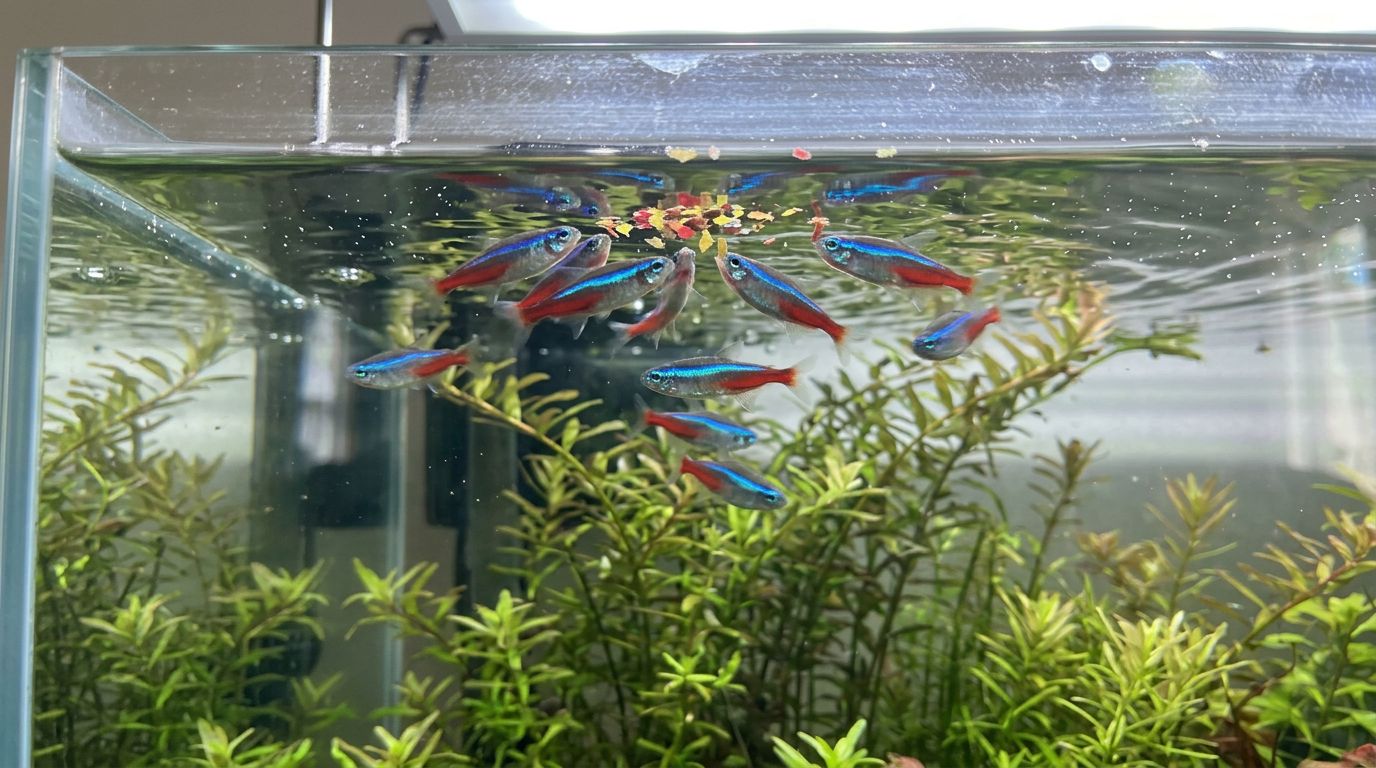
"How much food is enough?" "They swarm the glass every time I walk by, so I keep giving more." Almost every new fishkeeper wrestles with this. The short answer: feed once or twice a day, and only as much as your fish finish within 2-3 minutes. This article explains where that rule comes from, what overfeeding actually does to a tank, and how to dial in the right amount for yours.
The baseline: 1-2 times a day, gone in 2-3 minutes
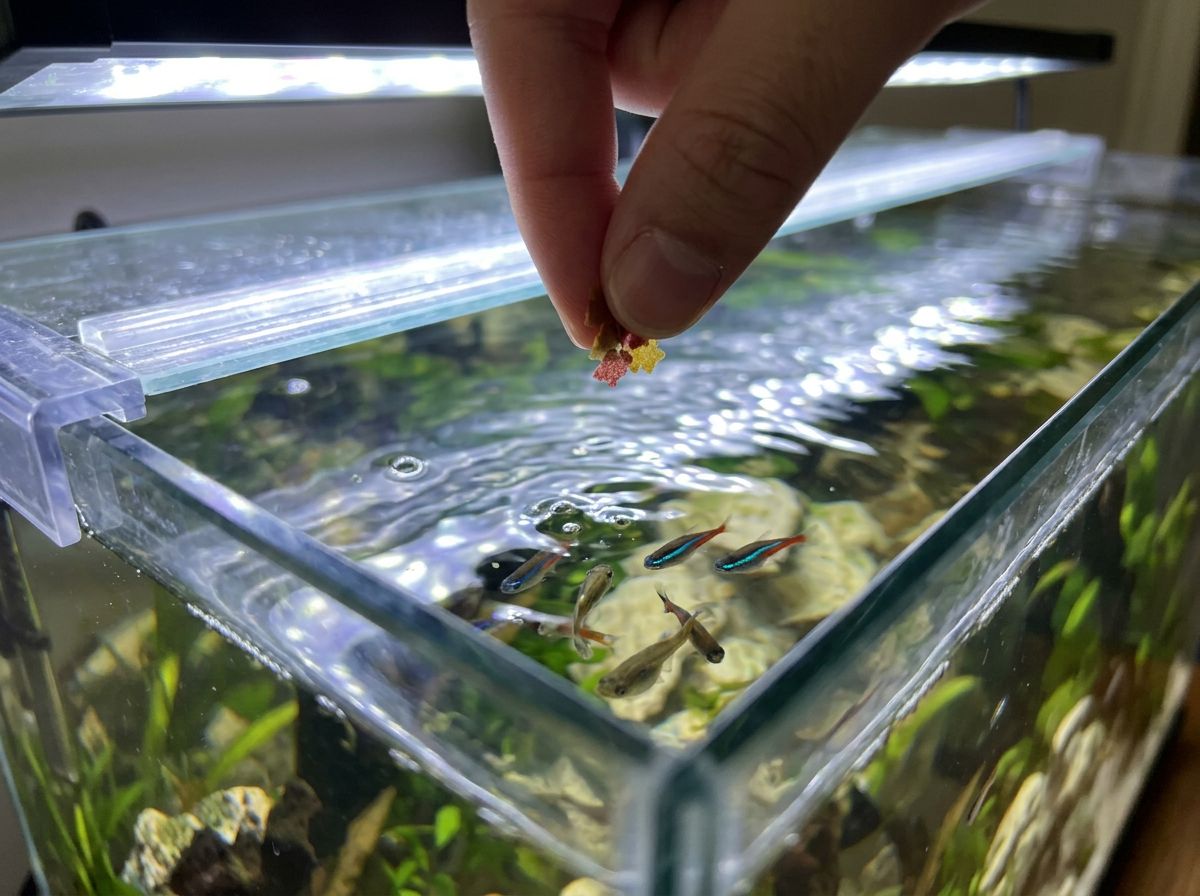
The most widely shared guideline for tropical fish has two parts:
- Frequency: once or twice a day
- Amount: whatever they eat completely within 2-3 minutes
You can judge the "2-3 minutes" simply by watching. Start with far less than a pinch, and add a little more if it disappears quickly. The serving suggestion on the food container is only a starting point; the right amount depends on how many fish you have and how big they are.
Fish rush to the surface when you approach because they have learned that people mean food. It's a habit, not a hunger signal. Begging does not mean they are underfed.
Why overfeeding is the number-one beginner mistake
Overfeeding, along with overstocking, is consistently cited as the most common reason beginners run into trouble. The problem is what happens to the food nobody eats.
Uneaten food and fish waste break down into ammonia, which is highly toxic. Beneficial bacteria convert it to nitrite and then nitrate. The more food goes in, the heavier that load becomes, and it shows up as:
- Cloudy water: overfeeding is one of the classic causes of a milky haze
- Algae: excess nutrients fuel hair algae and other outbreaks
- Nitrate buildup: nitrate climbs faster between water changes (aim for 0-25 mg/L; above 40-50 mg/L is the danger zone)
In other words, feeding lightly isn't just about your fish's health. It is water quality management. If you are fighting algae or cloudiness, reviewing how much you feed is the standard first step.
Remove leftovers
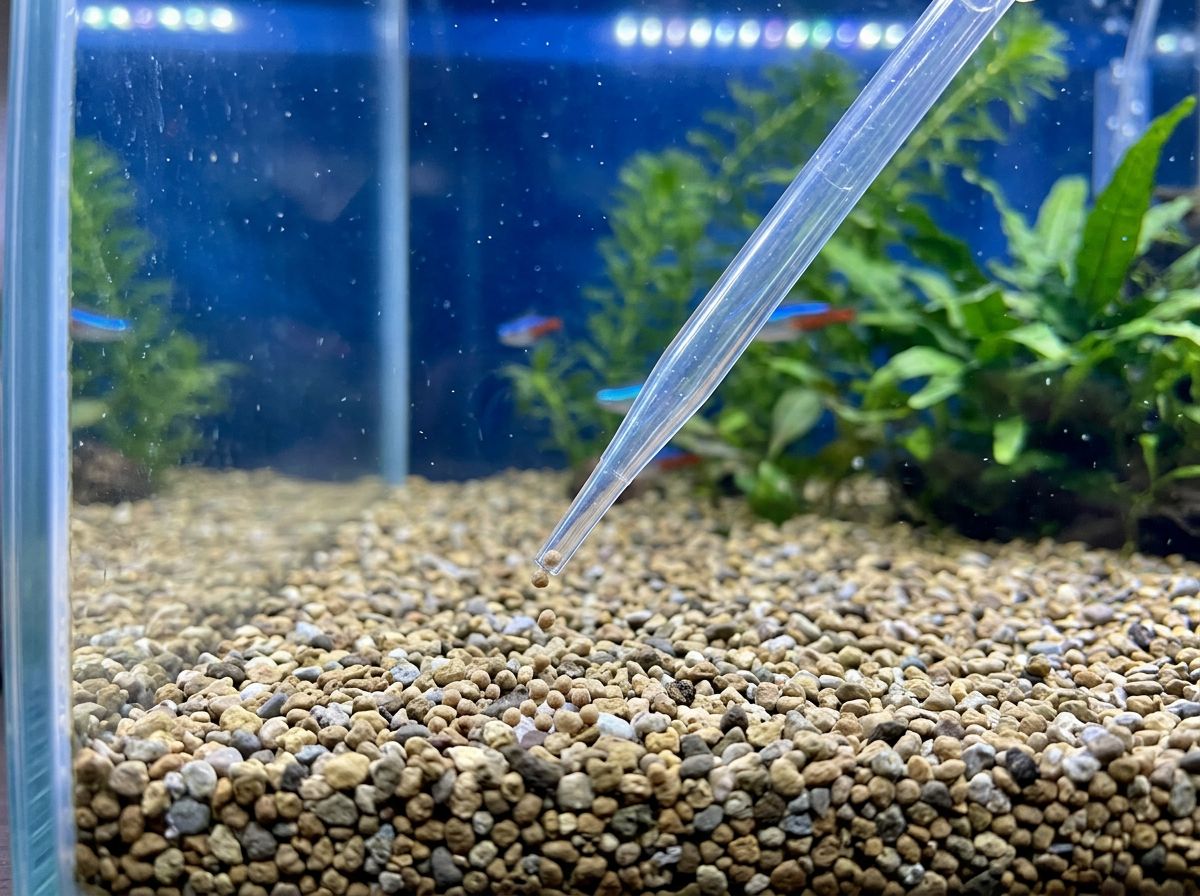
Anything still sitting on the bottom after 2-3 minutes should come out rather than be left to rot. A turkey baster or small net is enough, and it makes a real difference to how fast the water fouls.
- Leftovers every time means you are feeding too much. Cut back next time
- Food that has worked its way into the substrate comes out during your weekly water change when you vacuum part of the gravel
- Removing uneaten food is a daily task, right alongside checking the temperature and looking over your fish
Whether or not there are leftovers is your most reliable clue about portion size.
The weekly fasting day
Skipping food one day a week is a habit many experienced keepers speak well of. Think of it as a day for digestion to rest and for any leftover-food pollution to reset.
The exception is fry. Growing juveniles need frequent small meals, so they don't get a fasting day. Don't apply it as-is to bottom dwellers such as corydoras, or to fish that lose condition easily such as otocinclus, either. Food already has trouble reaching them, so go by how rounded their bellies look (see feeding corydoras and what otocinclus eat).
And if you are going away for a few days, resist the urge to feed extra before you leave. Whatever they can't finish only fouls the water. Feeding the normal amount is the safer choice.
Logging your feeding reveals your tank's "right amount"
Because the right amount varies by species, stocking level, and tank size, there is no universal number. That's exactly why it helps to note what you feed alongside leftovers and water test results.
Once you can see patterns like "nitrate climbed faster the week I fed more" or "the cloudy spell lined up with heavier feeding," you can set portions based on evidence instead of guesswork.
FAQ
Once a day or twice?
Both are within the normal range. If you feed twice, halve each portion so the daily total still fits the "finished in a few minutes" rule. Feeding at the same time every day, whenever suits your schedule, is easiest to stick to for you and your fish.
There are always leftovers. Are my fish sick?
The first thing to suspect is simply too much food. Reduce it and watch. If one particular fish still won't eat after you cut back, or you notice changes in how it swims or looks, it may be unwell. If things get worse, ask a knowledgeable fish store for advice.
Can I feed more if I do regular water changes?
Water changes dilute accumulated nitrate; they don't make leftover food disappear. Heavier feeding still raises the risk of cloudy water and algae. Keep the standard weekly 10-30% water change as your baseline and feed on the light side.
Summary
- The rule of thumb: 1-2 feedings a day, finished within 2-3 minutes
- Overfeeding is the top beginner mistake and leads to cloudy water, algae, and nitrate buildup
- Remove leftovers, and if there are leftovers every time, feed less
- A weekly fasting day is widely endorsed (except for fry; do not apply it as-is to bottom dwellers and easily thinned fish such as corydoras and otocinclus)
"That looks like too little" is usually about right, as many long-time keepers will tell you. Keep notes on feeding next to your water tests and your tank's ideal portion will reveal itself. If you track it in the app, Aquarium puts feeding notes, water quality judgments, and maintenance history on the same timeline so the patterns are easy to spot.