Cloudy Aquarium Water: 4 Causes and When to Just Wait It Out
Cloudy aquarium water has four causes: bacterial bloom, stirred-up substrate, overfeeding, or bacteria die-off. How to tell them apart and when to wait.
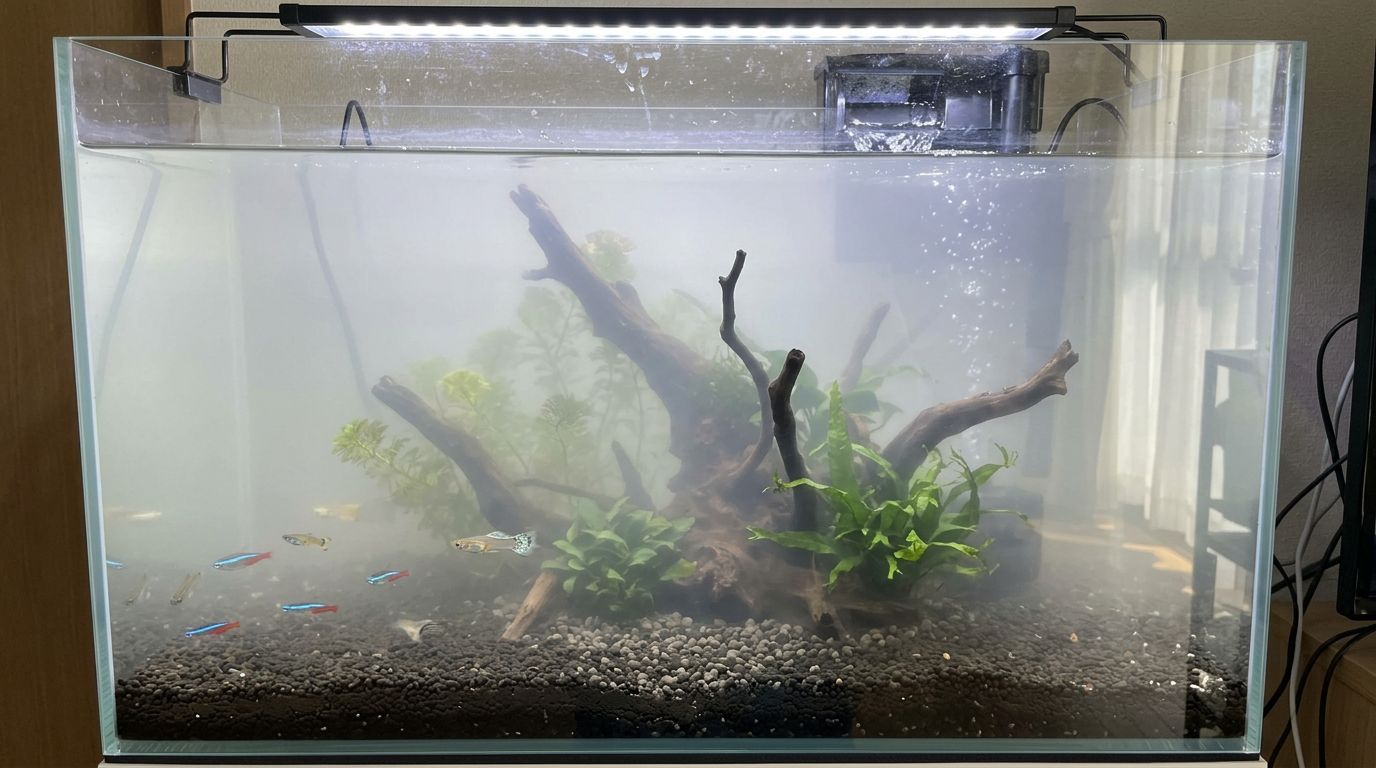
You wake up and the tank looks like someone poured in a splash of milk. It was crystal clear yesterday. Cloudy water is one of the first problems every new fishkeeper runs into, but it comes down to four main causes, and the most common one in a new tank, a bacterial bloom, usually clears on its own within 1-2 weeks. This article shows you how to tell the four apart, what to do about each, and which "fixes" make things worse.
The four causes of cloudy water
White cloudiness looks like one problem but can have very different origins. The usual suspects:
- A bacterial bloom in a new tank
- Stirred-up substrate
- Overfeeding
- A bacteria die-off (typically from rinsing filter media in tap water)
You can usually narrow it down by asking two questions: when did it start, and what did you do right before? Let's go through them.
Cause 1: Bacterial bloom in a new tank (wait it out)
Cloudiness that appears within the first few days to two weeks of setting up a tank is almost always this. On the way to a complete nitrogen cycle, which takes around 4-6 weeks, bacteria multiply rapidly, and the sheer number of them in the water makes it look hazy.
What to do: Mostly nothing. Give it 1-2 weeks. As the bacterial population balances out, the water clears by itself. The classic mistake here is to deep-clean the filter or do a massive water change to "fix" the haze. Both knock back the very bacteria you're trying to grow and prolong the cloudiness.
Keep testing ammonia and nitrite daily during this period. If the water is cloudy but the numbers are trending toward 0 mg/L for both, you're on track.
Cause 2: Stirred-up substrate (mechanical cloudiness)
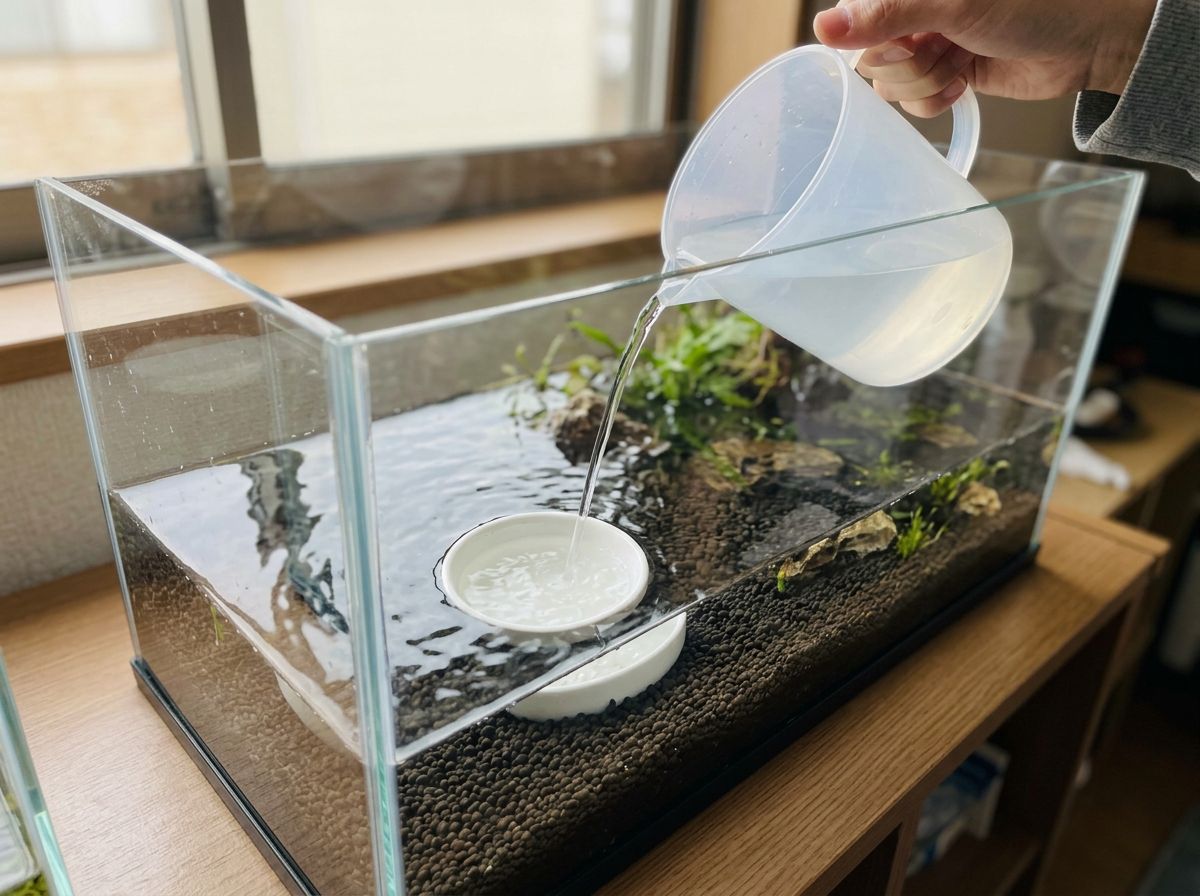
If the water turned cloudy right after a water change, gravel vacuuming, or rescaping, you're likely looking at fine particles from the substrate. Aqua soil in particular breaks down when you dig deep into it, releasing a fine dust.
What to do: With the filter running, particles settle or get trapped over time. To speed things up, swap in a fresh filter pad for better mechanical filtration (monthly is the usual replacement interval, but it's fine to do it early when the water is very murky). Next time, only skim the surface of aqua soil, and pour new water onto a plate or plastic sheet so it doesn't kick up the substrate.
Cause 3: Overfeeding (biological cloudiness)
In an established tank, sudden cloudiness is most often a sign of too much food. Uneaten food decays, bacteria multiply to break it down, and the water turns white. Overfeeding is the number one beginner mistake for a reason.
What to do: Dial back the food. The guideline is once or twice a day, only what's eaten within 2-3 minutes. Remove anything left on the bottom and feed less starting tomorrow. Keep your water changes at the normal 10-30% weekly pace rather than doing one huge change. Testing nitrate (target 0-25 mg/L) tells you in numbers how nutrient-rich the water has become.
Cause 4: Bacteria die-off (the one to take seriously)
Cloudiness right after cleaning the filter, especially after rinsing the media under tap water, is a warning sign. Chlorine kills the beneficial bacteria, and the water clouds up with dead bacteria and undecomposed waste. Ammonia and nitrite may rise, which makes this the most dangerous scenario for your fish.
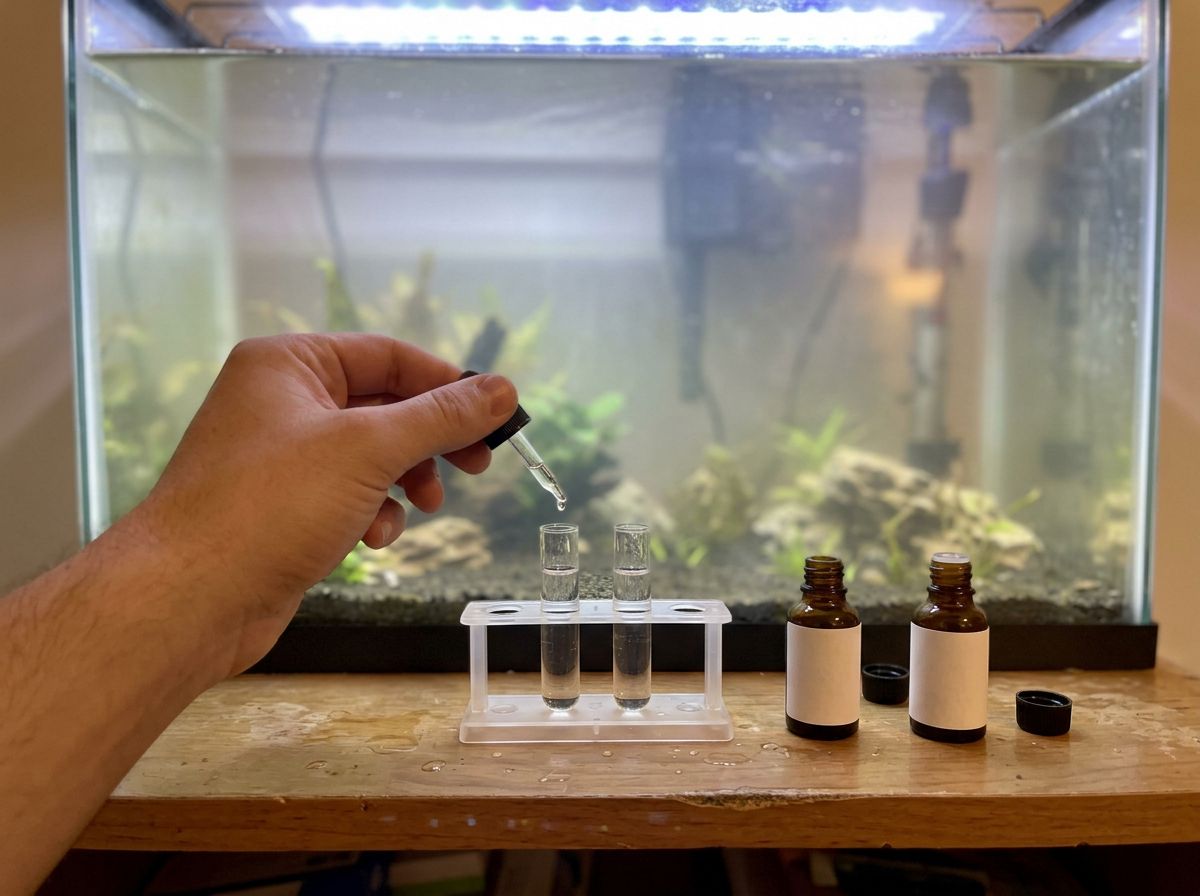
What to do: Test ammonia and nitrite right away. Both should read 0 mg/L. If either is detectable, do a small water change the same day (10-30%, dechlorinated and temperature-matched) and test daily until it is back to 0. If the reading is still in the danger zone after the change (ammonia 0.25 mg/L or more, nitrite above 0.5 mg/L), do a second small change that day and feed less. Manage the tank as if it were cycling again for a while.
Three rules prevent a repeat: rinse media in tank water only, replace at most one third to one half at a time, and never clean the filter on the same day as a water change.
Rules that apply to every kind of cloudiness
Whatever the cause:
- No giant water changes (sudden temperature and pH shifts stress fish; stick to 10-30% at a time)
- Don't try to fix it by tearing down the filter
- Feed less
- Test and log. Ammonia and nitrite readings tell you far more about the danger level than how the water looks
Noting when the water clouded, what you did just before, and when it cleared makes the next episode much easier to diagnose. The Aquarium app shows your water test results and photo timeline on the same screen, so if you track it in the app you can match the haze to the numbers afterward.
FAQ
Is cloudy water harmful to fish?
The cause matters more than the cloudiness itself. A bacterial bloom or stirred-up substrate rarely bothers fish much, but a bacteria die-off can mean rising ammonia and nitrite. If your fish seem off, test first. If things get worse, consult your local fish store.
How long should I wait before doing something?
For a bacterial bloom in a new tank, 1-2 weeks is the benchmark. If it hasn't cleared by then, or if the cloudiness appeared in a long-established tank, revisit your feeding amounts and how you clean the filter.
Can I use a water clarifier?
It's an option, but it treats the symptom. Unless you address the cause, the cloudiness will come back. If you do use one, follow the manufacturer's directions and review feeding, water changes, and filter handling at the same time.
Summary
- Cloudy water has four main causes: bacterial bloom, stirred-up substrate, overfeeding, bacteria die-off
- A new-tank bloom clears with 1-2 weeks of patience. Filter cleaning and big water changes backfire
- Feed once or twice a day, eaten within 2-3 minutes. Rinse media in tank water, on a different day from water changes
- Judge the danger by ammonia and nitrite readings, not by looks
Cloudy water is a signal that something changed. Before you start pulling the tank apart, test, write it down, and rule out the causes one at a time.