Bettas Need a Heater in Winter: What Happens Below 24°C
Bettas want 25-28°C. Below 24°C digestion suffers, below 20°C they barely move. Heater choice for small tanks, winter feeding and water changes, summer under 30°C.
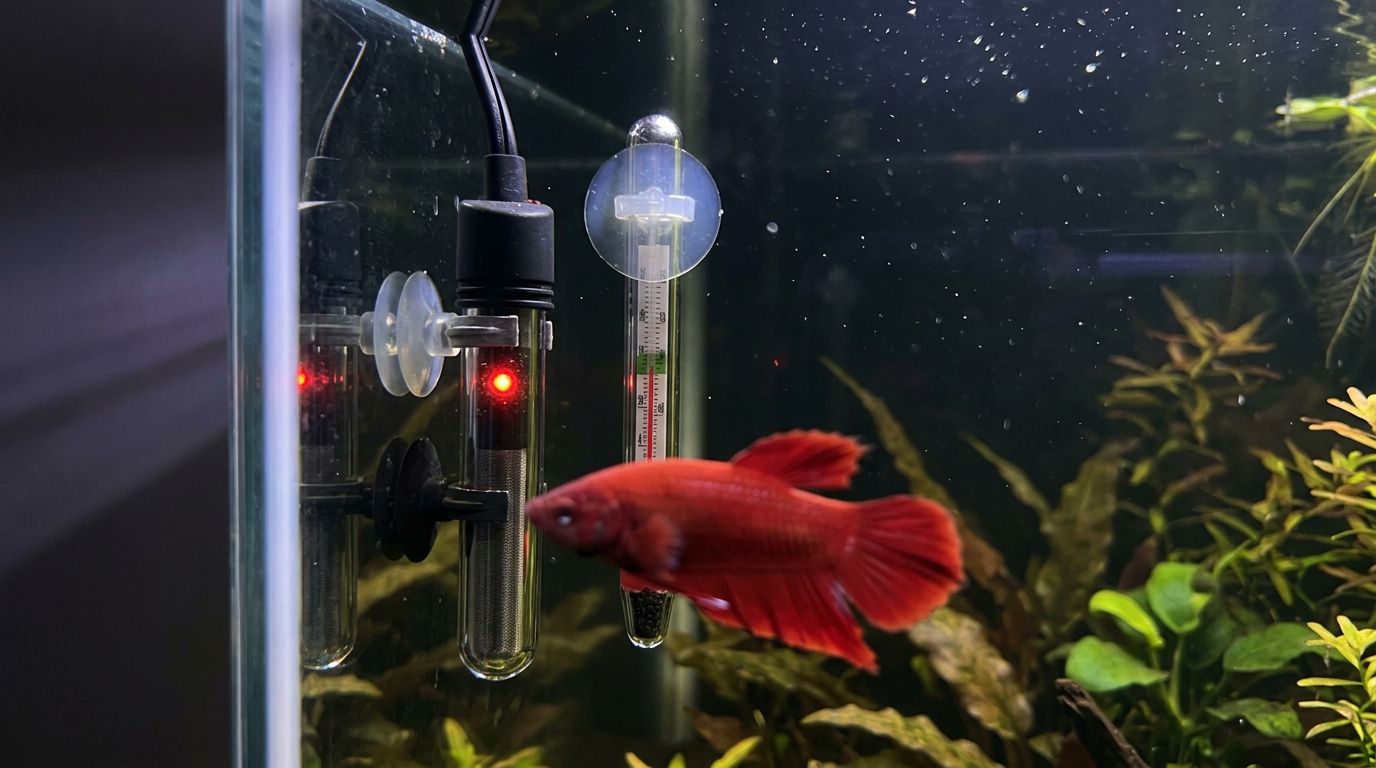
"Bettas are tough, they don't need a heater." "The room has air conditioning, it'll be fine." These autumn assumptions are behind most of the bettas that fade in winter. In short, a betta is a fish that requires a heater. Below 24°C (75°F) digestion suffers, below 20°C (68°F) they barely move, and around 18°C (64°F) the risk of illness rises. This article covers the betta's temperature range, what cold does to them step by step, how to choose and run a heater in a small tank, and the summer problem that gets overlooked: heat.
Bettas want 25-28°C, warmer than most tropicals
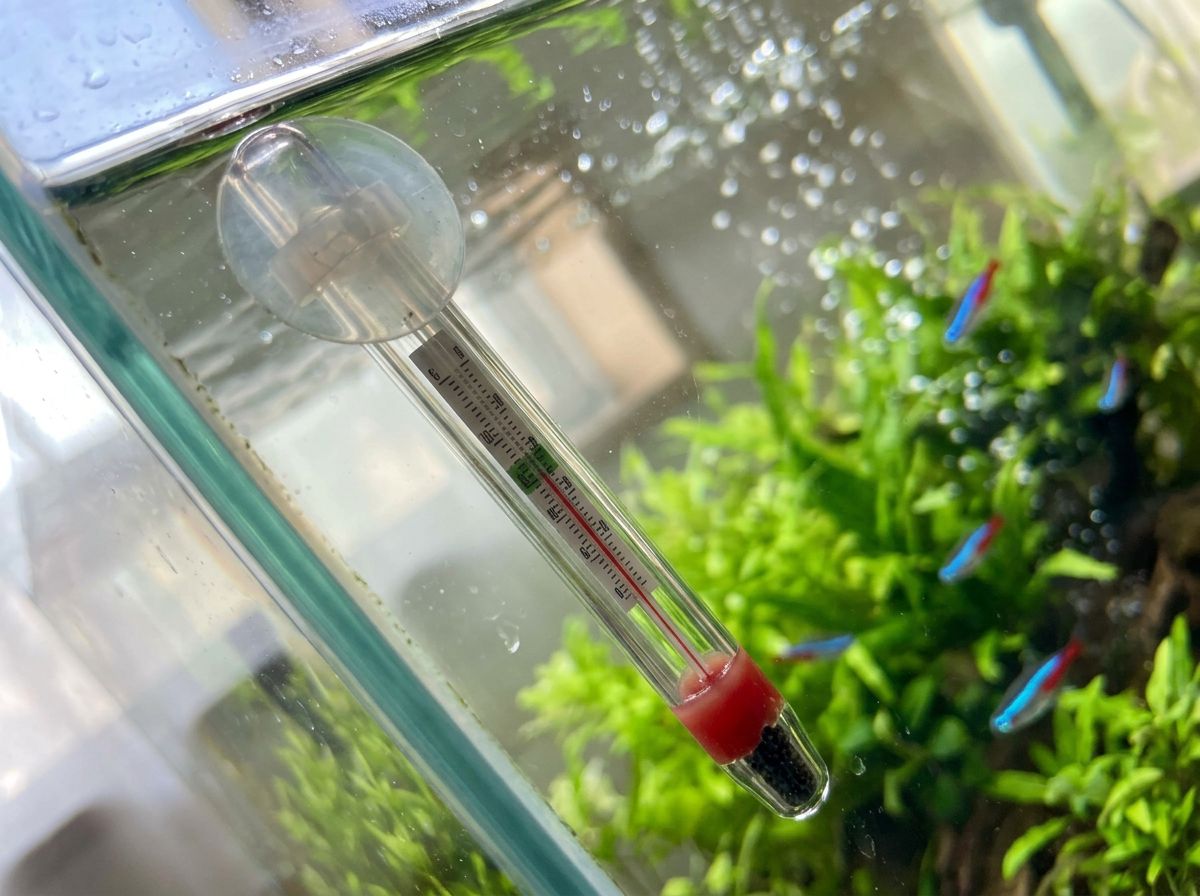
Bettas come from the tropics of Thailand and are comfortable at 25-28°C (77-82°F), centred around 26-27°C. Compared with the general tropical target of 22-28°C, the floor is about 3°C higher. Some international references give 22-30°C as a keeping range, but that is a tolerance band, not a day-to-day setting.
A heater's job is less "warming" than holding steady. The smaller the tank, the more the water tracks the room, so a small betta tank is exactly where a thermostatic heater matters.
What cold does: three steps at 24°C, 20°C and 18°C
As the water cools, the effects come in stages.
| Water temperature | What tends to happen |
|---|---|
| Below 24°C (75°F) | Digestion slows and indigestion becomes likely. The cue to cut feeding |
| Below 20°C (68°F) | Indigestion plus very little movement |
| Around 18°C (64°F) | Risk of illness climbs. Long cold spells shorten the lifespan |
You'll hear "mine made it through winter without a heater." That means it survived to spring; the indigestion and lost condition catch up later. Cold effects on tropical fish in general are in what happens when water temperature drops, and bettas are among the first to show them.
Choosing a heater for a small tank, and a separate thermometer
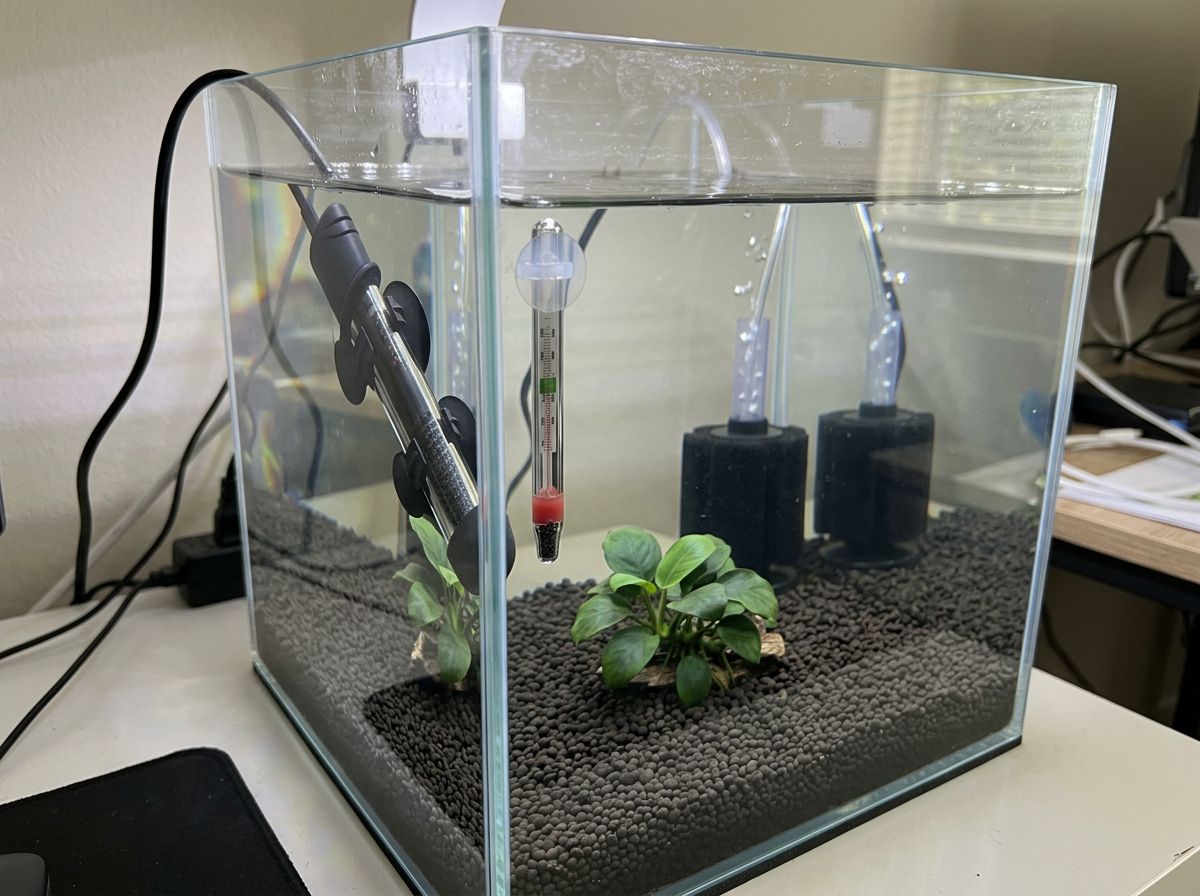
If you keep your betta in a small tank of around 10-20 liters (about 2.5-5 gal), a few specific points apply.
- Pick a thermostatic heater rated for your volume and check the maker's tank-size rating
- Mount a separate thermometer and read it every day. A failed thermostat can overheat or underheat, and the heater itself gives no sign. The daily reading is your function check
- Pad heaters and under-tank heaters depend on room temperature and are weak. Unless the room sits around 20°C (68°F), they may never reach betta range
- Unplug before water changes. A heater exposed to air when the level drops will run dry
If a jar is too small for a heater, running the room's air conditioning around the clock is sometimes suggested. Given the cost and instability, moving to a container that fits a heater is the more reliable fix. For heater replacement and a pre-winter check, see heater replacement and the pre-winter checklist.
Winter feeding and water changes
If the heater holds 26°C or above, feed the same amount year-round. If the water dips below 24°C at some point in the day, cut back and watch. Stale food is said to cause indigestion too, so don't use a tub that's been open for a long time.
Keep changing water in winter. The thing to watch is the temperature of the new water. Winter tap water is cold, so dechlorinate it, mix in warm water to within about 1°C (2°F) of the tank, and add it slowly. Bettas are sensitive to this; a gap of 2°C or more is said to cause shock.
In a heated, dry room, a small heated tank can lose about 1 cm of water a day to evaporation. Top off with dechlorinated, temperature-matched water as well.
Summer is the mirror image: stay under 30°C
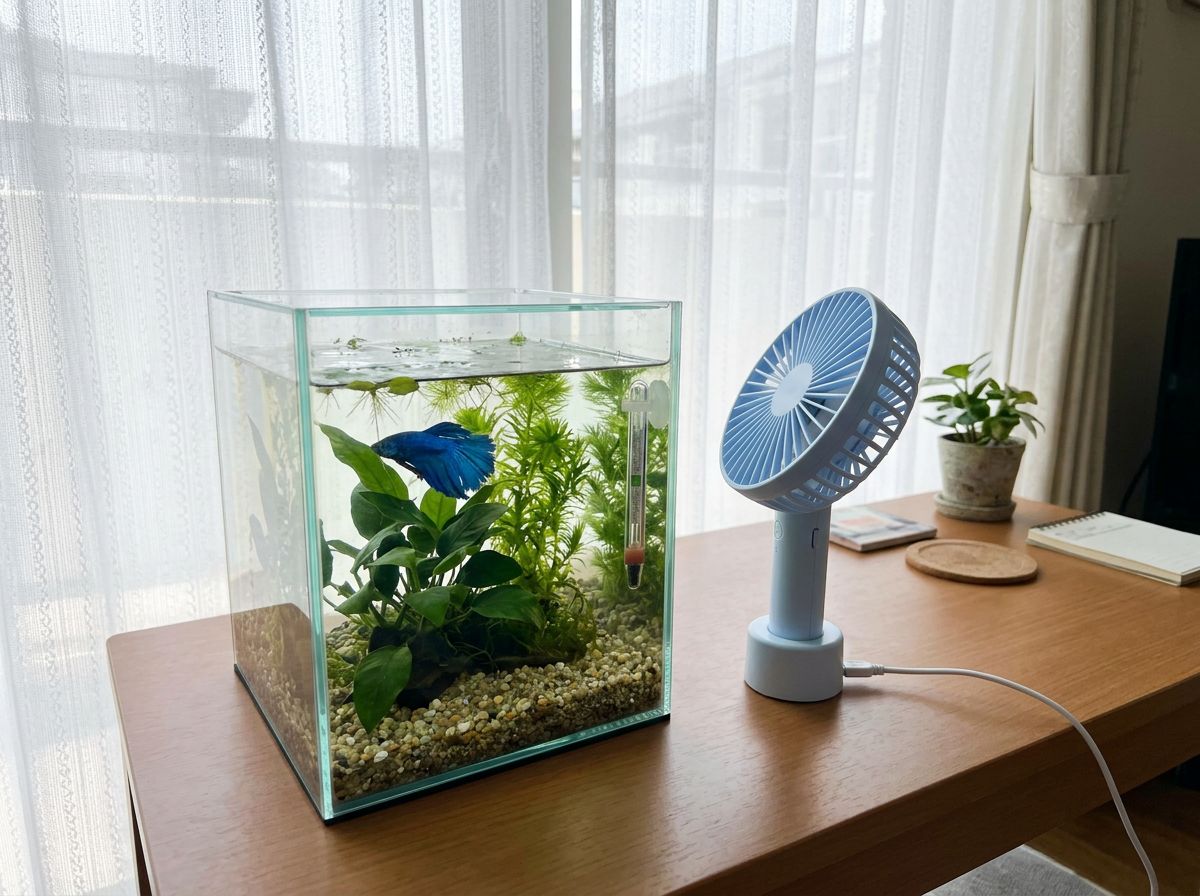
Temperature management isn't only a winter job. A 5-10 liter tank in a closed room in summer easily climbs past 30°C (86°F). Bettas breathe surface air, so oxygen isn't the first problem, but heat speeds up metabolism, fouls the water faster, and raises ammonia toxicity. Above 30°C is the danger zone on this site too.
Three fixes: keep the tank away from sunny windows, manage room temperature with air conditioning, and increase the water volume if you can. If the water does get hot, do not try to drop it in one go with ice, ice packs or a cold water change. Summer or winter, reading the thermometer at the same time every day is the best protection.
FAQ
When should the heater go in?
A thermostatic heater can stay in all year; it simply doesn't switch on while the water is above its setting. If you took it out, put it back when morning readings start dropping below 25°C. A warm afternoon says nothing about the water at dawn. Autumn is also the time to check its age and that it still works.
Fixed 26°C preset or adjustable?
A preset heater fixed at the betta's 26-27°C target is beginner-friendly because there's nothing to set wrong. If you need to change temperature, for breeding for example, choose adjustable. Either way, confirm with a separate thermometer.
The heater's in but the water won't warm up
Likely causes are too few watts for the volume, a room that's too cold (especially with pad or under-tank heaters), or an aging heater (makers suggest replacing after about a year). The thermometer itself may be off, so compare it with another.
Summary
- Bettas want 25-28°C, a higher floor than most tropicals
- Below 24°C indigestion, below 20°C barely moving, around 18°C illness risk
- Small tanks need a thermostatic heater sized to the volume plus a separate thermometer checked daily
- Winter changes and top-offs matched within 1°C. Above 26°C, feed as normal
- Summer: stay under 30°C with shade, air conditioning and volume
Small-tank temperatures move within a single day. Log daily temperature in the Aquarium app and a weakening heater or a summer spike shows up on the graph before it becomes a problem.